
Live in one unit
An eligible primary-residence loan may allow you to occupy a unit and rent the others, with program-specific treatment of rental income.
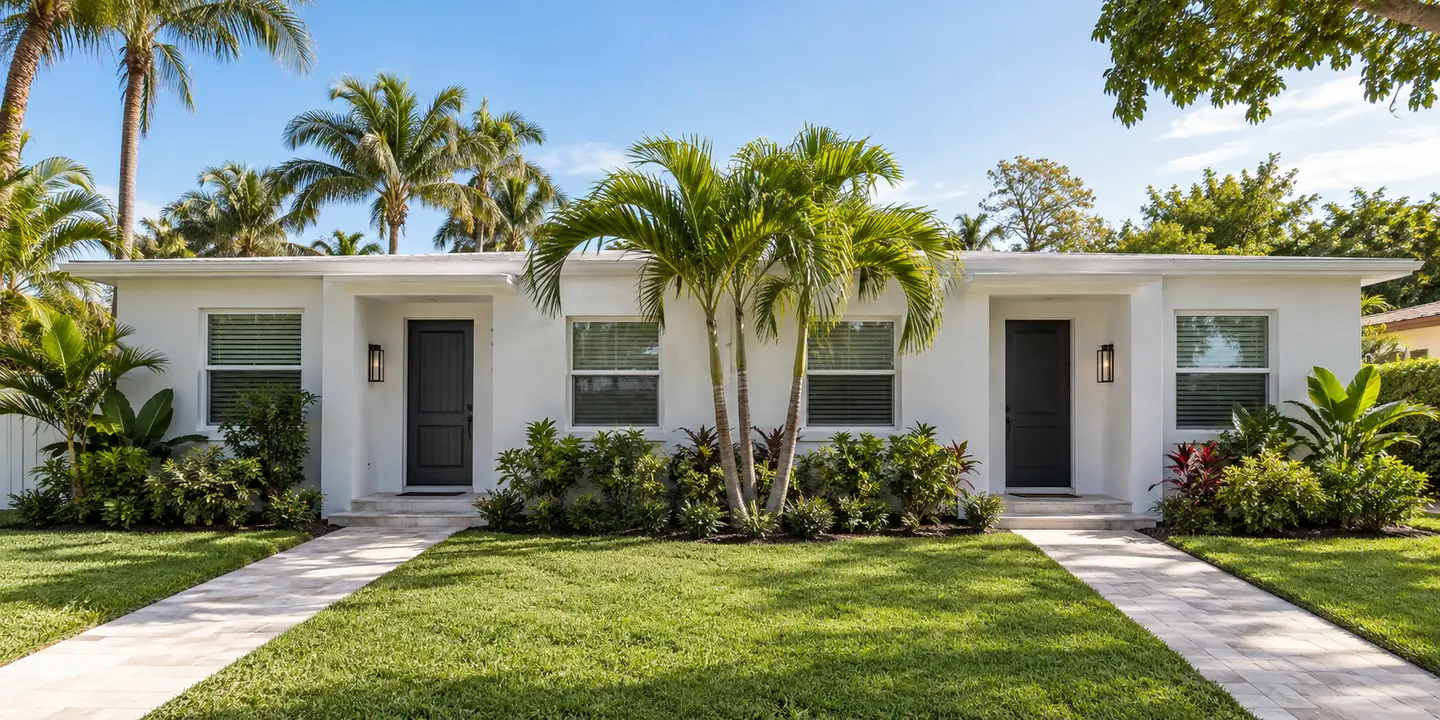
Buying a duplex, triplex or fourplex starts with two questions: will you live in a unit, and how will the lender evaluate the property’s income? Bennett Capital Partners helps Florida buyers and owners compare financing for properties with two to four legal residential units.

Two properties with the same price can need different loan reviews. Occupancy, unit count, lease history and condition determine which options deserve a closer look.
An eligible primary-residence loan may allow you to occupy a unit and rent the others, with program-specific treatment of rental income.
An investor may compare conventional financing with a property-income approach, depending on the borrower and lender’s guidelines.
An owner can review a new loan against the current balance, rental history, equity, closing costs and the purpose of the refinance.
Review FHA borrower and property considerations.
Explore this routeCompare the property-income approach for eligible rentals.
Explore this routeMove to a building and operations review for larger apartments.
Explore this routeDuplex, triplex and fourplex describe property types. Conventional, FHA and DSCR describe different financing or underwriting approaches. Keep those decisions separate.
A duplex has two residential units, a triplex has three, and a fourplex or quadplex has four. Eligible two-to-four-unit properties can fall within residential mortgage programs. A property with five or more units generally requires a different multifamily financing review.
The number of leases or rooms advertised does not establish the legal unit count. Review property records, permitted use, appraisal information and any conversion work. A single-family home with an accessory dwelling unit is not automatically a duplex.
| Property | Starting point |
|---|---|
| Duplex, triplex or fourplex | Confirm legal units, occupancy, condition and residential program eligibility. |
| Single-family home with an ADU | Review the accessory unit under the applicable property and rental-income guidelines. |
| Five or more apartments | Use a multifamily review focused on the building, operations and available capital sources. |
| Residential plus commercial space | Confirm mixed-use eligibility before assuming a standard residential mortgage applies. |
For an apartment building with five or more units, begin with multifamily and apartment financing. This page focuses on two-to-four-unit residential properties.
If you will live in one unit as your primary residence, disclose that intention and confirm the program’s occupancy requirements. Renting the other units does not automatically turn the entire transaction into a non-owner-occupied investment loan.
If you will rent all units and live elsewhere, the file should be evaluated as an investment property. That can change eligible programs, pricing, equity, reserves and how rental income is counted. Do not use primary-residence assumptions for an investment purchase.
For a first purchase, include vacancy, repairs and landlord responsibilities in your planning. A tenant’s expected rent should not be treated as guaranteed money available for every monthly payment.
| Approach | What it evaluates | Questions to resolve |
|---|---|---|
| Conventional residential mortgage | Borrower income, debts, credit, equity and permitted rental income. | Does the transaction meet the agency and lender rules for unit count and occupancy? |
| FHA primary-residence mortgage | Borrower qualification, owner occupancy and FHA property requirements. | What additional rental-income, reserve and property tests apply to this building? |
| DSCR investment financing | Qualifying property income compared with the required payment, under the lender’s method. | Does the program allow the unit count, lease type, ownership and property condition? |
The Freddie Mac two-to-four-unit mortgage overview describes agency financing for this property category. Agency guidance is not a promise that every lender supports every option.
Explore conventional mortgages, Florida FHA loans and DSCR investment-property loans for the underlying program differences. We confirm applicable lender availability for the complete scenario.

The lender determines which rents can be used and which documents support them. A lease, market-rent opinion and a history of rental receipts serve different purposes. Existing properties may require tax-return analysis; a purchase with limited rental history may follow another permitted documentation path.
In an owner-occupied building, expected rent from the unit you will occupy is not ordinary tenant income available to pay your own loan. The lender’s treatment of other units, vacancies and expenses must be established before you rely on rent for qualification.
The Fannie Mae rental-income guide sets out documentation and treatment for eligible residential transactions. Those rules should not be substituted for a DSCR lender’s separate calculation.
FHA financing is intended for eligible primary-residence transactions. A buyer considering a triplex or fourplex should discuss the FHA self-sufficiency review as well as personal income qualification. Passing one review does not establish that the other is satisfied.
Ask which appraisal rents and housing expenses are used, how vacancy or maintenance is treated, and what reserves apply. A duplex should not automatically be assigned all the same additional tests as a three- or four-unit property.
Our FHA two-to-four-unit guide and FHA self-sufficiency explanation provide supporting background. Confirm current requirements with the selected lender and HUD’s FHA handbook before relying on a specific calculation.
Conventional financing may be worth comparing for the same property. A borrower who does not fit a particular FHA property test should not assume every residential financing option has been ruled out.
Down payment is only one component of the cash requirement. Include closing costs, prepaid expenses, escrow deposits where required and any lender reserves. Separately consider repairs, vacancy, tenant turnover and maintenance after closing.
Loan limits depend on the applicable program, property location, unit count and year. A single-family county limit should not be applied to a fourplex without checking the correct category. Avoid assuming one down-payment percentage or reserve rule covers every loan.
Condition can change the financing route. Discuss major repairs, unpermitted units, unfinished conversions, deferred maintenance and insurance eligibility early. A standard purchase mortgage should not be assumed to include a renovation budget.
For Florida properties, obtain a property-specific insurance estimate and discuss any required flood coverage. Review tax assumptions for the ownership change rather than relying only on a seller’s current payment.
For a purchase, share the contract, financing dates, leases and unit information as early as possible. For a refinance, provide the current mortgage statement, property ownership history, rental records and your desired outcome.
Rate-and-term refinancing, cash-out and rehabilitation financing are different requests. A property that is eligible for a purchase loan may not qualify for the same leverage or terms on a cash-out transaction. Ownership through an LLC also requires a program-specific review.
Use the Florida refinance guide to compare the current debt with a proposed new loan. For conventional detail, our Fannie Mae two-to-four-unit guide supports the broader comparison here.
Before selecting a proposal, confirm the accepted unit count, occupancy, qualifying rents, cash to close and outstanding property conditions in one place. That makes it easier to compare offers that describe the same transaction.
Bennett Capital Partners Mortgage Brokers, NMLS 2046862, is a mortgage broker, not a direct lender. Not a commitment to lend. All loans are subject to credit and property approval. Programs, terms and eligibility are subject to change and borrower and property qualification.
A clear unit and occupancy summary helps identify the right financing review before an application is assembled.
Start My ReviewBennett Capital Partners coordinates the financing review. The selected lender makes the final underwriting decision.
Confirm legal units, intended occupancy and purchase or refinance purpose.
Review available borrower-income and rental-income financing approaches.
Coordinate financial records, appraisal, leases and property conditions.
Review final terms and funding requirements, then retain funds for the property’s ongoing needs.
Compare available lending sources and prepare the borrower and property information needed for underwriting.
Philip Bennett, MBAFounder, Bennett Capital Partners Mortgage BrokersUse the previous and next review buttons, swipe, or use the left and right arrow keys to browse reviews. Home goes to the first review; End goes to the last.
“He was very responsive and followed the deal all the way through closing.”
“Clear communication, strong execution, and real expertise.”
“Phil Bennett of Bennett Capital Partners Mortgage went the extra mile when approving my loan.”
“What truly stood out was their deep knowledge of the Miami real estate market, particularly in condominium financing.”
“He is professional, has the right resources to make things happen quickly.”
“I highly recommend using Phillip and his team if you have an investment property you need financed or refinanced.”
From our current website, October 17, 2026. See Google for the latest reviews.
An eligible four-unit property can fall within residential mortgage programs. Legal unit count, occupancy, borrower qualifications and lender guidelines determine the available route. Five-or-more-unit buildings generally require a separate multifamily financing review.
An eligible owner-occupied program may allow that arrangement. You must meet its primary-residence requirements and disclose your actual plans. The lender separately determines how rental income from the other units can be used.
No. House hacking usually describes living in part of a property while renting other space. The underlying mortgage still has its own occupancy, income, property and qualification requirements.
Potentially, if the program accepts it and the required documentation supports it. The lender may adjust the rental income or limit its use. Advertised gross rent is not automatically qualifying income.
FHA primary-residence financing requires eligible owner occupancy. A purchase where you intend to rent every unit and live elsewhere needs a different financing review.
The additional FHA self-sufficiency review discussed here concerns three- and four-unit properties. Do not apply all triplex and fourplex requirements to a duplex without confirming the relevant FHA and lender guidelines.
Some investment-property programs support eligible two-to-four-unit buildings. Availability depends on the lender, property, rent documentation, ownership and occupancy. DSCR financing should not be assumed suitable for an owner-occupied transaction.
A refinance may be possible under an eligible program. Cash-out, rate-and-term and rehabilitation requests have different rules. Review equity, ownership history, rents, condition and the new loan’s costs before choosing a path.
Eligible primary homes, second homes and investment properties with conventional income and asset documentation.
View the briefFHA-insured financing with its own borrower, property and mortgage-insurance requirements.
View the briefFor eligible veterans, service members and surviving spouses, with COE, entitlement and lender review.
View the briefRental-property financing that evaluates eligible property income and debt coverage.
View the briefStart with the multifamily hub for apartment acquisitions, operating performance and the documents needed to compare financing.
View the briefBrowse financing by the property, income documentation and transaction.
Open the directoryShare your Florida duplex, triplex or fourplex scenario for a financing review.