
Buying a home
Compare the payment with association dues, insurance, and taxes included.
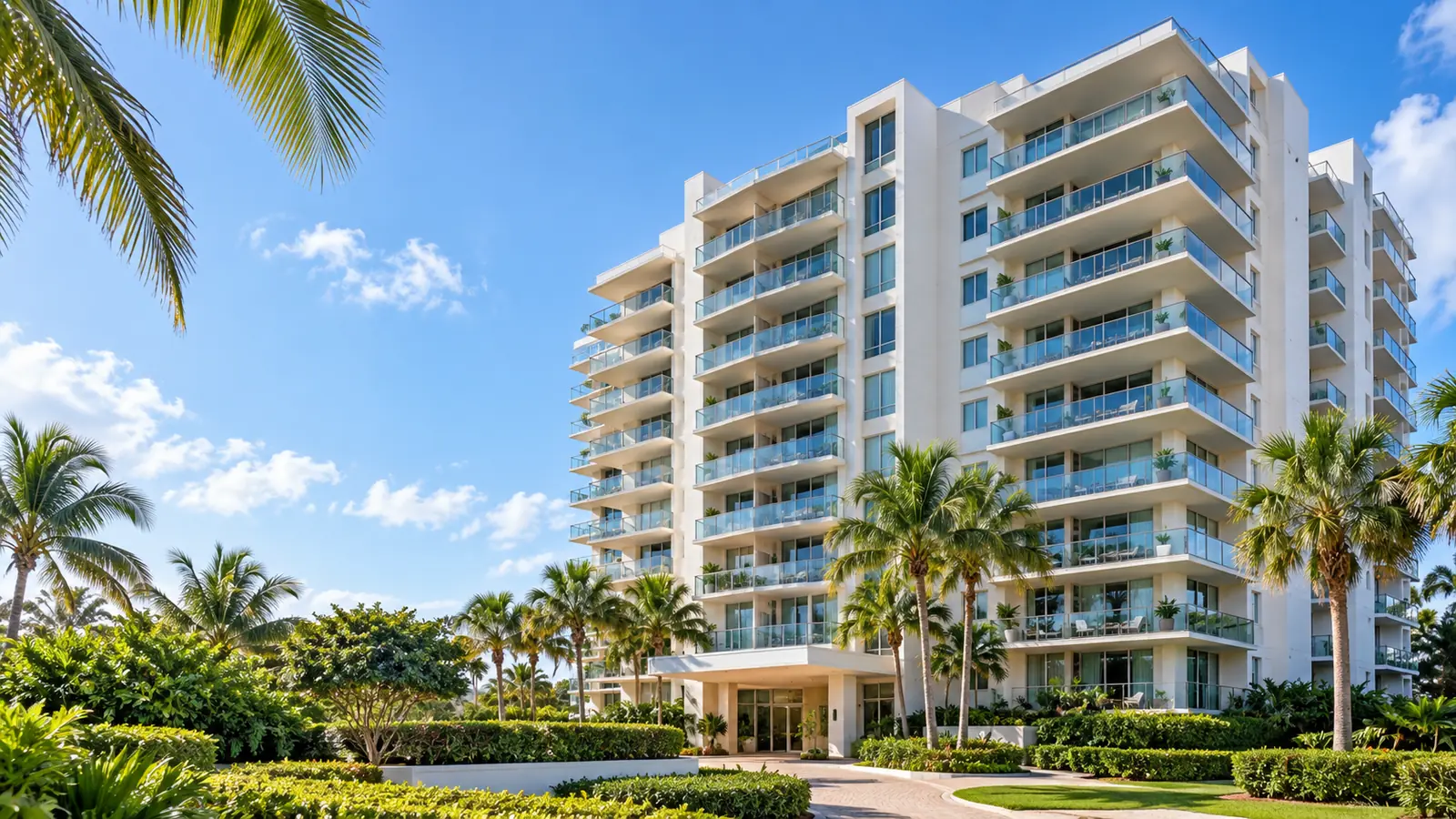
A condo loan depends on both your finances and the building. We help Florida buyers and owners compare financing, review association requirements, and plan the full cost of ownership before choosing a loan.

A condo mortgage finances an individually owned condominium unit. The lender reviews the borrower and the property, including applicable project requirements. Your income may support the payment while an unresolved building issue changes the financing options. Start both reviews early.
Before gathering project records, review the condo questionnaire guide and our overview of Florida condo law and association records. Eligible veterans comparing financing routes can also use the VA-approved condo search guide.
Compare the payment with association dues, insurance, and taxes included.
Match the loan to actual rental use and project restrictions.
Recheck current building information and the new loan requirements.
Credit, income, debt obligations, documented closing funds, and reserves.
Inspection findings, repairs, assessments, litigation, and ownership structure.
Budget, reserve information, insurance, and outstanding obligations.
Primary residence, second home, or rental use, together with the requested loan amount.
Review conventional financing when the project meets the applicable agency criteria.
Explore this routeEvaluate a specific project issue under available portfolio or specialty programs.
Explore this routeHotel-style projects need a separate assessment of rental agreements and operation.
Explore this routeA larger loan does not remove the need for borrower and project approval.
Explore this routeUse this guide to identify the project category, organize the review, and compare the complete cost of ownership.
Start with the address and legal property type, not the listing’s marketing description. Then establish whether you will live there, use it as a second home, or rent it out. Those facts help narrow the program before you compare rates.
| Path | Key question | Next step |
|---|---|---|
| Conventional | Does the project meet the applicable agency requirements? | Request the lender’s project review. |
| Jumbo | Does the larger loan fit a lender’s borrower and building guidelines? | Review the loan amount and project together. |
| Specialty portfolio | Which specific agency requirement is not met? | Document the issue for a targeted exception review. |
| FHA or VA | Do the borrower, loan, and project meet the relevant government program rules? | Confirm the separate approval route; do not infer it from conventional eligibility. |
| Investor financing | Does the actual rental use fit both the program and project rules? | Review leases, expected cash flow, and restrictions. Compare DSCR loans for investment properties when rental income is the qualification route. Confirm how the lender treats association dues, taxes, insurance and rental restrictions; cash flow does not override project eligibility. |
A condo described as “approved” still needs a transaction-specific check. Ask which program reviewed it, what documentation was used, and whether that information remains current.
| Review | Condo | Detached house outside a condo project |
|---|---|---|
| Borrower | Income, credit, debts, assets and intended occupancy. | The same core borrower questions apply. |
| Property | The individual unit plus applicable project eligibility. | The individual property; separate association rules may apply. |
| Ownership costs | Include association dues, unit insurance and applicable assessments. | Include taxes, insurance and applicable association costs. |
| Outside documents | Association, management and insurance records may be needed. | The document package depends on the property and loan program. |
There is no single minimum for every condo. The following are educational program starting points, not a Bennett Capital Partners loan offer. The borrower, unit and project must qualify, and the lender may require more.
| Program | Published starting point | What still needs approval |
|---|---|---|
| HomeReady | As little as 3% down | Principal residence, qualifying income at or below 80% of area median income, borrower underwriting and eligible condo project. |
| FHA | As little as 3.5% down for eligible borrowers | FHA borrower and property requirements, mortgage insurance, and an approved project or eligible Single-Unit Approval. |
| VA | No down payment may be possible | Eligible borrower, entitlement, lender requirements, sufficient appraised value and a VA-approved condo project. |
These primary-home examples do not establish terms for a second home, investment condo, jumbo loan or non-warrantable project. Ask for the actual down payment, reserves, credit requirements and mortgage-insurance costs for your building and intended use.
Official references: Fannie Mae HomeReady, HUD FHA financing, FHA condo approval and VA purchase loans.
| Review | What it addresses | What to request |
|---|---|---|
| Milestone inspection | Structural condition under the applicable Florida inspection requirements. | The report, any required follow-up and evidence that identified work was completed. |
| Structural Integrity Reserve Study (SIRS) | Planning and funding for covered building components. | The current study, adopted budget and the association’s funding plan. |
| Mortgage project review | Eligibility for the selected agency or lender program. | Current association records, insurance and the lender’s written list of unresolved conditions. |
A completed inspection or SIRS is not a mortgage approval. Applicability and deadlines depend on the building and current law; ask the association and local enforcing authority which requirements apply. Use Florida DBPR’s inspection guidance for the state requirements.
Fannie Mae retired Limited Review for applications dated on or after August 3, 2026. Established projects use Full Review or an applicable Waiver of Project Review; a waiver is not a waiver of all eligibility and insurance requirements. Its Full Review reserve-allocation threshold increases to 15% of annual budgeted income assessment for applications on or after January 4, 2027. An acceptable reserve study may support an alternative under the applicable rules. When the lender relies on a study, the budget must include its highest recommended allocation; baseline funding is not accepted.
These are Fannie Mae policies, not a universal rule for every loan or a substitute for Florida law. Have the lender confirm the application-date requirements and review method. See Fannie Mae’s project standards update and our condo guidelines guide.
A developer’s sales approval or deposit schedule does not establish mortgage eligibility. Ask about construction completion, legal phases, presales, association control, insurance and the expected closing date. Confirm the financing and rate-lock plan before relying on a projected delivery date.
Ask the seller or management company who can supply the current project package, how long it takes, and what it costs. A missing insurance endorsement or incomplete questionnaire can become a closing issue even when your personal documentation is ready.
| Record | Question it helps answer |
|---|---|
| Current budget and financial records | Are recurring expenses and future obligations addressed? |
| Insurance information | What protection and deductibles apply to the project? |
| Questionnaire and governing documents | How is the project owned, managed, and used? |
| Inspection and repair records | Are there unresolved structural, safety, or major repair issues? |
| Assessment details | What is being funded, who owes it, and when is payment due? |
Reference: Fannie Mae project standards. Requirements are checked for the selected program and transaction.
The exact package depends on the review path. Have the lender confirm current requirements instead of ordering an old checklist or relying on a past buyer’s approval.
Buying in Aventura? Use our Aventura condo records guidance to separate City files, association documents and lender review.
Buying farther south along the coast? Review our Sunny Isles Beach condo financing guidance.
Condo affordability can change materially with association dues and insurance. Review the unit policy separately from the association’s master policy, and ask whether an announced assessment is a lump sum or a recurring installment.
Illustrative monthly ownership budget
Assume $2,600 in principal and interest, $650 in property taxes, $180 in unit insurance, $900 in association dues, and a $250 assessment installment. The total is $4,580 per month before utilities, maintenance, any applicable mortgage insurance, or other costs. Removing the assessment from a mortgage quote does not remove it from your household budget. These are assumed expenses, not an advertised loan payment or a lender qualification result.
Also plan for upfront lender and settlement costs, project review charges, prepaid items, and funds needed after closing. For a purchase, an old tax bill may not reflect your future assessment.
Find out the exact reason. Missing documents, insurance gaps, a rental structure, and an unresolved safety issue are different problems. Some need additional information, some may fit a specialty program, and some prevent financing until corrected.
| Issue | Evidence to obtain | Financing next step |
|---|---|---|
| Unclear insurance coverage | Master policy, endorsements, deductible details and unit coverage. | Have the lender identify the exact coverage gap and acceptable correction. |
| Special assessment | Purpose, remaining balance, payment schedule and repair status. | Review affordability and the underlying work. An assessment for an unresolved critical repair can make a project ineligible under Fannie Mae rules. |
| Litigation | Current case summary and documentation from the appropriate parties. | Ask the lender to assess the nature of the claim; do not assume every lawsuit has the same result. |
| Hotel or rental operation | Declaration, rental restrictions and management agreements. | Separate an ordinary rental condo from a hotel-operated project before selecting a program. |
| Missing records or incomplete work | Management contact, inspection findings and completion evidence. | Resolve the missing evidence or required repairs; more down payment alone does not cure the issue. |
Use non-warrantable condo financing for a documented agency eligibility issue. Use condotel financing when the project operates as a hotel. Neither category is a promise that every building can be financed.
A stronger next questionInstead of asking whether the building is on a list, ask: “What specific requirement is unresolved, what evidence would resolve it, and who must provide that evidence?” This makes the next step clear for your broker, agent, and association.
There is no single condo mortgage rate. Compare the interest rate, APR, points, lender fees, mortgage insurance and cash to close. Association dues and assessments affect your budget even when they are not included in the quoted loan payment.
Compare offers using the same occupancy, loan amount, down payment, rate-lock period, and points. Ask whether the quote assumes agency eligibility that has not yet been confirmed. A preliminary rate is less useful if the project later requires a different loan.
The appraisal, association documents, insurance review, and borrower underwriting can move on separate schedules. Before making a financing-dependent offer, discuss the contract deadline and the time needed to obtain project records. Your real estate adviser can help address the contract terms.
Bennett Capital Partners works from Miami with Florida condo buyers and owners. Request a condo review with the building address, intended use, purchase price or estimated value, and the association contact.
Bennett Capital Partners Mortgage Brokers, NMLS 2046862. Not a commitment to lend. All loans are subject to credit and property approval. Programs, terms, and eligibility are subject to change and borrower and property qualification.
We can identify the next document requests before you order a complete association package.
Start My ReviewWe help compare lending sources and coordinate your submission. The lender makes the final credit and property decision.
Confirm the unit, intended occupancy, loan amount, and deadline.
Determine which agency or specialty review may fit.
Include dues, insurance, taxes, fees, and any assessment obligations.
Track borrower underwriting, project review, appraisal, and closing.
Compare available lending sources and prepare the borrower and property information needed for underwriting.
Philip Bennett, MBAFounder, Bennett Capital Partners Mortgage BrokersUse the previous and next review buttons, swipe, or use the left and right arrow keys to browse reviews. Home goes to the first review; End goes to the last.
“He was very responsive and followed the deal all the way through closing.”
“Clear communication, strong execution, and real expertise.”
“Phil Bennett of Bennett Capital Partners Mortgage went the extra mile when approving my loan.”
“What truly stood out was their deep knowledge of the Miami real estate market, particularly in condominium financing.”
“He is professional, has the right resources to make things happen quickly.”
“I highly recommend using Phillip and his team if you have an investment property you need financed or refinanced.”
Firmwide client review excerpts. See Google for the latest reviews.
Explore these relevant articles from Bennett Capital Partners.
For a Brickell condo, our Brickell mortgage guide explains how to match the unit, association and City records before handing the open questions to your lender.

Explore project review changes and confirm the rules that apply to your transaction.
Read guide
Understand the factors behind equity requirements and funds needed for closing.
Read guide
Learn how hotel operations and rental arrangements affect the financing review.
Read guideAgency-eligible condo financing when the project and loan meet the applicable requirements.
View the briefSpecialty options for certain project issues outside standard agency eligibility.
View the briefReview hotel-style operation, rental arrangements and property-specific financing requirements.
View the briefFHA-insured financing with its own borrower, property and mortgage-insurance requirements.
View the briefBrowse financing by the property, income documentation and transaction.
Open the directoryA condo can require an additional project review. Your personal finances and the building’s eligibility are separate parts of the decision. Requesting association documents early can reduce avoidable delays.
The amount depends on the borrower, occupancy, loan program, loan size, and project eligibility. A low-down-payment option for one approved project does not establish the terms for another building.
Association dues generally form part of the housing expense considered by the lender. Taxes, insurance, and applicable assessment obligations also affect affordability. Review the full cost rather than the principal-and-interest figure alone.
No. Conventional project eligibility and FHA or VA program approval are distinct. The lender must verify the requirements of the actual financing program.
Possibly, but the project’s operating model and rental restrictions matter. A project operating as a hotel can require specialty condotel financing. Permission to rent is not the same as loan eligibility.
A refinance requires review under the new program and current circumstances. The lender determines which project requirements or exceptions apply; an older mortgage does not guarantee the new loan.
Not necessarily. More equity can affect financing options, but it does not automatically resolve missing insurance, unsafe conditions, title issues, or other program restrictions.
As early as practical after identifying the building. Share the address, association contact, intended use, and deadline so the financing review can proceed alongside your borrower qualification.
No. A borrower preapproval may still depend on the unit, appraisal and condo project meeting the program requirements. Ask which borrower and building conditions remain before treating the financing as complete.
Send the building address, intended use, and your purchase or refinance goal.