
An investment purchase
Evaluate an eligible property that needs financing on a defined timeline.

Buying, renovating or refinancing an investment property? Bennett Capital Partners Mortgage Brokers helps you compare hard money options, with the cash needed at closing, renovation draws, total costs and repayment deadline clearly identified.

A hard money loan is real estate financing from a private capital source, often used for a short-term investment purchase, renovation, or bridge. The property and repayment plan are central, but lenders can also review credit, experience, liquidity and documentation. Our Florida hard money guide explains the review. It is not guaranteed approval based only on equity.
Evaluate an eligible property that needs financing on a defined timeline.
Understand how the rehab budget, draws, and contingency will be funded.
Match the loan maturity with a credible, documented exit plan.
The useful number is the cost through your expected payoff, not the advertised rate alone. Request a property-specific quote showing these three items together.
Confirm the interest rate, payment schedule and whether interest applies to the full commitment or only funds advanced.
Separate the initial advance from any rehab holdback. Add closing charges, required reserves and work you must fund before reimbursement.
Price the expected holding period, minimum interest, exit charges and extension conditions. A lower rate does not always mean a lower total cost.
See the itemized cost checklist or use the hard money loan calculator to estimate a scenario. Calculator results are planning estimates, not a loan offer.
Purchase price, current condition, accepted valuation, and applicable leverage measures.
Scope of work, budget, permits, contractor, schedule, and contingency.
Experience, liquidity, credit, entity documents, and ability to carry the property.
Expected sale or refinancing, timing, costs, and a fallback if the plan changes.
Hard money can be useful when a property’s condition or a defined business plan does not fit a standard long-term loan. The reason for using short-term debt should be clear: acquire, complete a defined improvement, stabilize, or bridge to an identified event.
If the property already qualifies for an appropriate long-term loan and timing permits, compare that option too. Avoid paying for a bridge merely because the application is marketed as simple. For a home you plan to occupy, disclose that fact; a business-purpose investor program is not a substitute for an owner-occupied loan.
| Plan | What the lender needs to understand |
|---|---|
| Renovate and sell | Scope, realistic resale value, selling costs, and a completion schedule. |
| Renovate and rent | Rehab budget, market rent, stabilization needs, and the future rental-loan requirements. |
| Acquire quickly | Why the deadline exists, title readiness, valuation, and funds available. |
| Refinance a short-term loan | Existing maturity, payoff, current condition, and the updated exit plan. |
Property type alone does not establish eligibility. Send the actual use, condition and business plan so the right lending channel can be evaluated. Review our Florida fix-and-flip guide for renovation projects or bridge financing for a short-term purchase or refinance.
| Property or plan | What the review needs |
|---|---|
| House or two-to-four-unit investment | Occupancy, condition, comparable sales, scope of work and whether you intend to sell or rent. |
| Condo renovation | Unit eligibility, association documents, assessments, renovation approvals and the intended buyer or refinance market. |
| Five or more units or a commercial building | A separate commercial review of property use, income, leases and the exit. Start with our commercial hard money guide. |
| Land or ground-up construction | Entitlements, permits, plans, utilities and a detailed construction budget need specialized review. See construction financing. |
| Completed rental you plan to keep | Compare DSCR financing before paying for a temporary loan, if the property and borrower already qualify. |
A large headline loan amount can conceal renovation holdbacks, fees, and cash needed between draws.
Loan-to-value compares debt with the lender’s accepted value. Loan-to-cost compares debt with an accepted project cost. An after-repair-value limit uses a projected completed value. Ask which measures apply and whether the lender uses more than one.
| Item | Assumed amount |
|---|---|
| Purchase price | $300,000 |
| Renovation budget | $60,000 |
| Total loan commitment | $270,000 |
| Renovation funds held for future draws | $60,000 |
| Initial advance before charges | $210,000 |
| Purchase-price gap | $90,000, before fees and other cash requirements |
These figures illustrate a funding structure, not available leverage or a credit offer. The borrower may need additional cash for transaction costs, reserves, carrying expenses, and work paid before reimbursement. Ask for the initial advance and the draw schedule in writing.
| Measure | Illustrative calculation | What it tells you |
|---|---|---|
| Loan to accepted cost | If accepted cost is $360,000, $270,000 ÷ $360,000 = 75% LTC. | The commitment relative to the assumed eligible purchase and renovation cost. |
| Loan to after-repair value | If accepted ARV is $450,000, $270,000 ÷ $450,000 = 60%. | The commitment relative to the assumed completed value. |
| Initial advance relative to price | $210,000 ÷ $300,000 = 70%. | How much of the assumed purchase price is funded before charges. |
When several limits apply: If hypothetical underwriting calculations produce a $270,000 LTC cap and a $250,000 ARV cap, the lower $250,000 cap controls before any other conditions or deductions. In that case, the commitment would be $250,000 rather than the $270,000 used above, so initial funding and borrower cash would need to be recalculated. These assumed caps are not Bennett program terms.
These are different measurements of the same hypothetical transaction, not program limits. Cash to prepare includes the purchase-price gap, transaction charges, required reserves and work paid before a draw, less applicable deposits or credits.
A renovation holdback is not always available when a contractor sends the first invoice. Confirm whether work must be completed before reimbursement, which inspections are required, and how lien documentation is handled. The draw process affects your working capital.
| Question | Why it affects the project |
|---|---|
| Who pays before the first draw? | You may need cash beyond the stated down payment. |
| What evidence releases funds? | Inspections, invoices, lien waivers, and approved work can be required. |
| How are changes approved? | A scope change may need lender consent and additional equity. |
| What is excluded from the budget? | Permits, soft costs, utilities, or contingencies may be treated separately. |
| How is interest calculated? | Terms can differ on committed versus advanced funds. |
Illustrative reimbursement sequence: At closing, confirm the initial advance and retained rehab funds. Before the first inspection, pay eligible work using the agreed funding source. Submit the draw request with the required invoices and lien documents; the lender then reviews the work and releases approved funds. Keep enough working cash for the next phase and possible delays. Actual advance, inspection and release rules depend on the agreement.
Keep a contingency for delays and unexpected work. A higher resale projection does not supply the cash needed to finish the renovation.
Build these checks into the project calendar rather than treating the loan approval as the only deadline.
For renovation work, coordinate the Notice of Commencement with your lender, title professional and contractor before work and construction disbursements. Confirm required recording, posting, lien releases and expiration dates. An investor planning to sell or rent should not assume the owner-builder exemption applies; confirm the permit and licensing requirements with the building department.
Florida charges documentary stamp tax on recorded mortgages at $0.35 per $100, or portion thereof, of secured indebtedness, subject to applicable exemptions. Ask the title professional to identify the taxable amount, any credit for prior tax, applicable intangible tax and recording costs. Do not assume a renovation holdback reduces the amount used to calculate those charges.
| Review | Who to ask |
|---|---|
| Title, existing liens, payoff figures, recording and applicable closing taxes | Title or settlement professional; request an itemized estimate and identify unresolved exceptions. |
| Permit history, open permits and planned alterations | Local building department and your contractor; confirm approvals and timing for the actual scope. |
| Insurance for the property’s use and condition | Insurance agent; discuss vacancy, renovation, wind and flood coverage requirements and whether coverage can be bound by closing. |
| Condo documents and project issues | Association and lender; review assessments, inspection information, renovation restrictions and eligibility. |
For local context, see our Miami hard money guide and Fort Lauderdale hard money guide. Each property still needs an individual review.
Request a written breakdown of origination and broker charges, valuation, legal and settlement costs, servicing, draw inspections, extension fees, and any minimum-interest or prepayment requirement. Compare offers using the same anticipated holding period.
| Cost category | Confirm in writing |
|---|---|
| At application and closing | Lender points, broker compensation, underwriting, valuation, legal, title, settlement, recording and applicable taxes. Identify deposits, refunds and charges deducted from proceeds. |
| During the work | Interest basis, servicing, draw and inspection fees, reimbursement timing and the cash needed between draws. |
| Property carrying costs | Insurance appropriate to the use and work, property taxes, utilities and association charges. These are separate from the lender’s quoted payment. |
| At payoff or maturity | Minimum interest, prepayment or exit charges, outstanding principal, accrued interest and the conditions and fees for any extension. |
A loan advertised with a low rate can still be expensive when fixed fees are spread over a short project. Conversely, focusing only on points can miss monthly carrying costs or an expensive extension. Ask which deposits are refundable if the transaction does not close.
Illustration: a delayed exitIf assumed property carrying costs are $3,200 per month, a three-month delay adds $9,600 before any extension charge, repair overrun, or additional selling expense. This simple stress test is not a quoted loan payment. Use the actual cost schedule for your project.
One point means 1% of the amount used to calculate that fee. In the hypothetical example above, one point on the $270,000 commitment is $2,700; one point on the $210,000 initial advance is $2,100. Ask which amount applies to each quoted fee.
If a lender charges interest on the $60,000 held for later draws, each one percentage point of annual interest on that unused amount equals $50 per month using a simple annual-rate-divided-by-12 estimate. Multiply by the quoted annual rate in percentage points and the months outstanding. A lender charging only on advanced funds would not charge that interest before the draw. Actual interest depends on the agreement, daily balance and day-count method. These calculations explain the fee basis; they are not offered rates or terms.
Ask whether an LLC borrower must also provide a personal guaranty, who must sign it and which obligations it covers. Request the draft loan and guaranty documents early. Have your attorney explain whether the lender can seek repayment beyond the property, any limits on that recourse, and the events that can trigger additional liability.
Check the maturity date before committing. An extension may require approval, fees, or additional conditions; it should not be treated as automatic.
No. A property-led initial review is not the same as a commitment without borrower screening. Credit, liquidity, experience, existing debt and guarantees may affect eligibility or terms. Ask which checks are required before paying application or valuation charges. Our guide to no-credit-check hard money claims explains that distinction.
If this is your first project, say so at the outset. Present the contractor’s qualifications, a realistic budget, cash reserves and a documented exit. Prior project requirements vary by lender; do not assume a first project is automatically eligible or ineligible.
For a sale, consider achievable pricing, time on market, commissions, closing costs, and the payoff. For a refinance, review property condition, rent, value, ownership history, and the future lender’s requirements. A projected takeout loan is not an approval.
A stabilized rental may later fit DSCR financing, while a larger income-producing property may need a commercial mortgage. Ask what must be true at that stage rather than assuming the short-term lender’s valuation will transfer.
Illustration: a smaller refinance leaves a cash gap. Assume the hard money payoff is $270,000. If a hypothetical refinance produces $280,000 after its closing costs, $10,000 remains after payoff. If a lower appraisal or weaker rent reduces those net proceeds to $250,000, you need $20,000 from another acceptable source to repay the same debt. These are assumed dollar amounts, not quoted proceeds or program limits. Additional accrued interest or fees would increase the payoff.
Ask the proposed refinance lender about rent support, coverage requirements, ownership seasoning, property condition and the value basis it will use. Plan for the gap before the short-term loan matures.
Bennett Capital Partners helps investors evaluate available Florida private lending channels. Request a hard money scenario review with the address, contract price, work budget, requested funding, deadline, and exit plan.
The property secures the debt. Failure to repay can put the collateral at risk of foreclosure. Review a delayed-sale or smaller-refinance outcome before accepting a short maturity, and establish what cash or other realistic repayment resources remain if the preferred exit falls through.
Bennett Capital Partners Mortgage Brokers, NMLS 2046862. Not a commitment to lend. All loans are subject to credit and property approval. Programs, terms, and eligibility are subject to change and borrower and property qualification.
A credible project package helps us compare the financing that can support it.
Start My ReviewWe help compare lending sources and coordinate your submission. The lender makes the final credit and property decision.
Understand the property, timeline, work, and repayment plan.
Distinguish initial proceeds, holdbacks, and borrower cash needs.
Review costs, draws, guarantees, maturity, and exit provisions.
Track valuation, title, lender conditions, and required project documents.
Compare available lending sources and prepare the borrower and property information needed for underwriting.
Philip Bennett, MBAFounder, Bennett Capital Partners Mortgage BrokersUse the previous and next review buttons, swipe, or use the left and right arrow keys to browse reviews. Home goes to the first review; End goes to the last.
“He was very responsive and followed the deal all the way through closing.”
“Clear communication, strong execution, and real expertise.”
“Phil Bennett of Bennett Capital Partners Mortgage went the extra mile when approving my loan.”
“What truly stood out was their deep knowledge of the Miami real estate market, particularly in condominium financing.”
“He is professional, has the right resources to make things happen quickly.”
“I highly recommend using Phillip and his team if you have an investment property you need financed or refinanced.”
Firmwide client review excerpts from our website; not specific hard money loan outcomes. See Google for the latest reviews.
Explore these relevant articles from Bennett Capital Partners.

Review how a completed-value estimate differs from today’s property condition.
Read guide
Consider the terms and costs of financing a short-term property need.
Read guide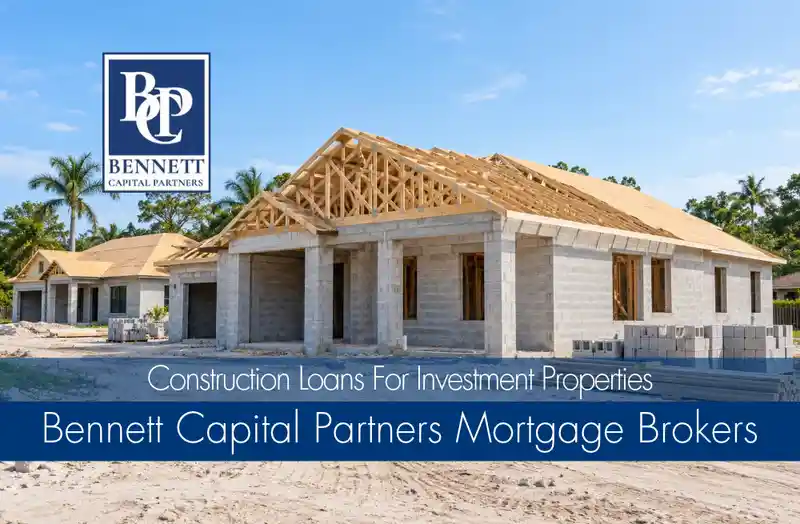
Review construction financing considerations for a project that requires new work.
Read guideReview private-capital options for eligible property and business-purpose scenarios.
View the briefCompare short-term financing for residential property acquisitions, refinances, and eligible renovations, with a defined sale or refinance exit.
View the briefA new-build review covering the builder, budget, draws and permanent financing or exit.
View the briefUse the investor hub to compare rental purchases, refinancing and project financing by property and transaction.
View the briefBrowse financing by the property, income documentation and transaction.
Open the directoryNo. Property value matters, but lenders can also review credit, experience, liquidity, condition, documentation, and the repayment plan. Equity alone does not guarantee approval.
Timing depends on the lender, title, valuation, property, documents, and transaction complexity. Share the actual deadline at the start. A fast-closing advertisement is not a commitment for a particular property.
Some programs finance eligible work through a holdback and draw process. Confirm initial funding, reimbursement requirements, inspections, excluded costs, and the cash you need before each draw.
LTV compares the loan with accepted property value; LTC compares it with accepted project cost. ARV means after-repair value. A lender may use several limits, and the most restrictive can affect proceeds.
Do not use an investment or business-purpose program for a home you intend to occupy. Disclose the actual occupancy and purpose so an appropriate financing review can be made.
Terms vary. Ask about prepayment charges, minimum-interest provisions, exit fees, and any other payoff conditions. Compare the cost using your expected project timeline.
An eligible completed rental may qualify, but the future lender must review income, value, condition, ownership history, and borrower requirements at that time. A takeout refinance is not guaranteed.
You may face additional carrying costs, extension conditions, or a required payoff at maturity. Review the agreement and discuss available options early. An extension should not be assumed.
A renovation loan can reserve part of its commitment for later draws. Fees, payoff amounts and other required funds can also affect closing proceeds. Request the initial advance, holdback, draw conditions and remaining cash requirement as separate figures.
Send the property, work budget, requested loan, and target date.