
Buy or refinance a rental
Compare borrower-income qualification and applicable rental cash-flow methods.
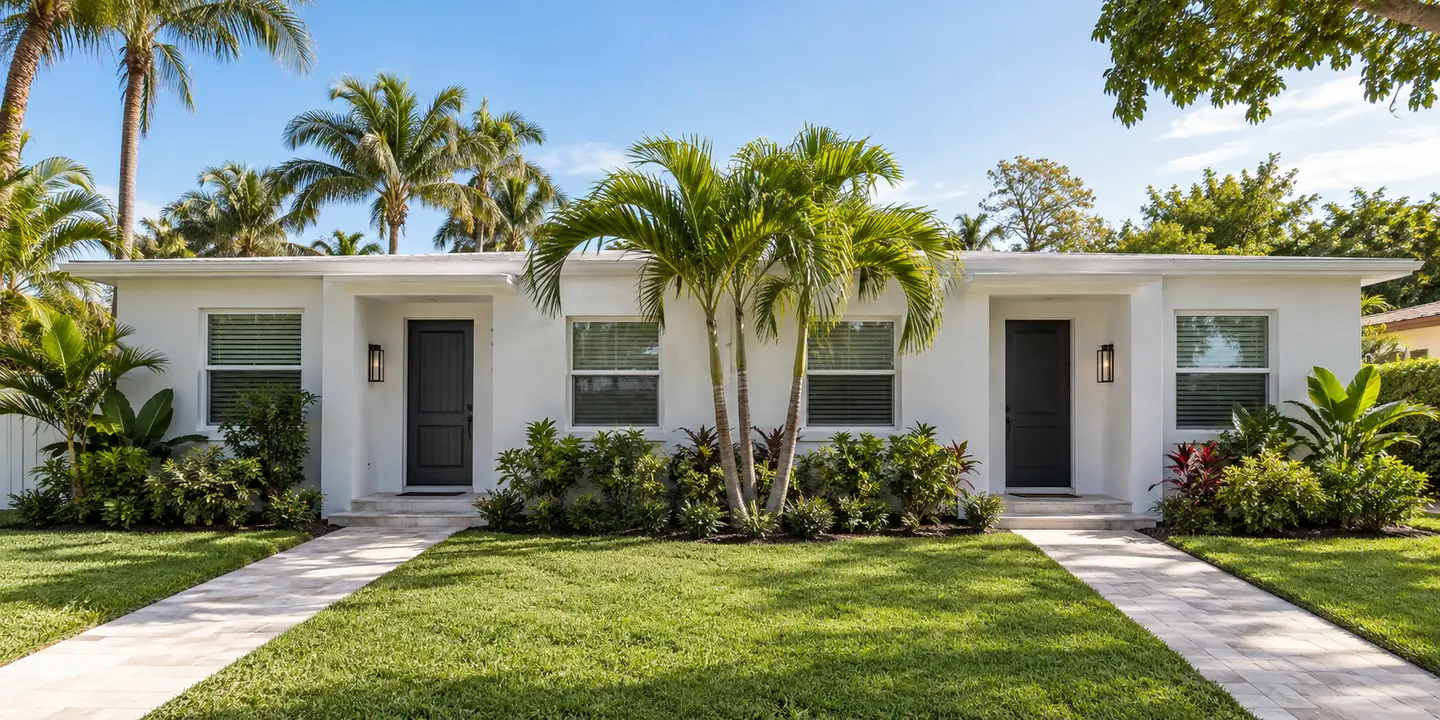
Compare investment property loans for buying a rental or refinancing one you own. Bennett Capital Partners Mortgage Brokers helps Florida investors compare conventional, DSCR and project financing based on the property, available cash and income documentation.

Start with the property and your holding plan. A rent-ready home, a renovation for resale and a five-unit apartment building call for different financing reviews.
Compare borrower-income qualification and applicable rental cash-flow methods.
Match the work and exit plan to financing that addresses the transition.
Separate residential investment property from commercial multifamily and mixed-use underwriting.
Choose the closest scenario. These starting points help organize the discussion; they do not determine loan eligibility.
Building from the ground up? Start with construction loans. For a renovation intended for resale, also compare hard money financing. Buildings combining residential and commercial space need a mixed-use financing review.
Compare qualification, cash needs and the property’s operating cushion before choosing a loan.
For an eligible rental with one to four units, the first decision is often whether to qualify through your documented income or the property’s rental income. Both routes still require a credit, asset and property review.
| What gets reviewed | Conventional investment mortgage | DSCR rental loan |
|---|---|---|
| Income | Your documented income and debts, plus rental income allowed by the program. | Accepted rent compared with the lender’s required housing payment; personal debt-to-income qualification generally is not the basis. |
| Down payment | Fannie Mae’s standard Desktop Underwriter (DU) purchase matrix allows up to 85% loan-to-value (LTV) for one unit and 75% for two to four units: at least 15% or 25% down, respectively, if eligible. | Lender-specific. Required equity depends on credit, rent coverage, property type and transaction. |
| Reserves | Fannie Mae DU generally requires six months of the qualifying housing payment for investment properties; other financed properties can add requirements. | Lender-specific. Confirm the amount, acceptable assets and what must remain after closing. |
| Rent evidence | Tax returns, leases and appraisal rent documentation as applicable. The lender does not simply count every dollar of projected rent. | The lender specifies acceptable lease, market-rent or other revenue evidence and its coverage calculation. |
| Ownership | Standard Fannie Mae loans require individual borrowers, with specified trust and program exceptions. An LLC cannot be the borrower under the standard individual-borrower rules. | Some programs allow an LLC. Confirm entity documents, authorized signers and any personal guarantee. |
| Property condition | The property must meet the selected program’s eligibility and condition requirements. | A rental loan is not automatically a renovation loan. Incomplete work may require another financing path. |
The conventional figures are agency limits, not a Bennett loan offer. Credit, underwriting, appraisal, property restrictions and lender overlays can require more cash. Mortgage insurance and other costs may apply. See Fannie Mae’s Eligibility Matrix, reserve rules and borrower eligibility.
Tell the broker whether you have managed rental property before and whether you currently have a housing payment. Under Fannie Mae’s rental-income rules, a borrower with less than 12 months of property-management experience may only use qualifying rental income to offset the property’s housing payment. Positive rent is not automatically extra qualifying income.
Use the conventional mortgage page or DSCR loan page for program detail. If you need a different way to document self-employment income, compare bank statement loans or other non-QM options. A different documentation method still requires underwriting.
Disclose investment use, even if a second-home advertisement appears more attractive. The actual occupancy plan determines the review.
A duplex, triplex or fourplex may follow an owner-occupied path. See 2-to-4-unit financing; five or more units belong in the commercial multifamily review.
Check association rules, project eligibility and permitted rental use. Review condo financing alongside your loan category.
Separate money paid at closing from repairs and cash you keep available afterward. A lender’s minimum reserves do not replace an operating budget.
| Budget item | Illustrative amount |
|---|---|
| Down payment: 25% of purchase price | $100,000 |
| Closing costs, prepaid items and initial escrows | $12,000 |
| Initial repairs paid after closing | $8,000 |
| Cash retained for reserves and contingencies | $20,000 |
| Total cash allocated to the plan | $140,000 |
The example allocates $112,000 to the purchase closing before deposit credits and adjustments, plus $28,000 for repairs and retained cash. Earnest money already paid is credited toward closing, not added again. Reserves remain your assets; they are not a fee.
The example uses 25% down to show the full cash plan, not a universal minimum. Less money down changes the loan amount, payment and potentially mortgage insurance. Actual costs and required reserves can be higher.
For a new $300,000 taxable mortgage fully secured by a Florida property worth at least that amount, documentary stamp tax at $0.35 per $100 is $1,050. Nonrecurring intangible tax at 0.002 is $600. The combined $1,650 is included within this example’s $12,000 closing allowance, not an extra charge on top. Exemptions, credits, refinance treatment and deed transfer taxes require a closing-agent calculation.
Rent above the mortgage payment does not mean the investment has a comfortable cushion. This hypothetical monthly budget is an investor planning example, not a rate quote, appraisal or lender DSCR calculation.
| Monthly item | Base case | Lower-rent case |
|---|---|---|
| Scheduled rent | $4,000 | $3,600 |
| Principal and interest (assumed) | −$2,200 | −$2,200 |
| Property taxes (assumed) | −$450 | −$450 |
| Property insurance (assumed) | −$350 | −$350 |
| HOA dues | −$100 | −$100 |
| Vacancy allowance: 5% of scheduled rent | −$200 | −$180 |
| Routine maintenance: 5% of scheduled rent | −$200 | −$180 |
| Management allowance: 8% of scheduled rent | −$320 | −$288 |
| Capital replacement reserve | −$100 | −$100 |
| Cash remaining before income taxes | $80 | −$248 |
All expense amounts and percentages above are assumptions to replace with property-specific estimates. The base case leaves only $960 a year. One $2,000 special assessment would turn that into a $1,040 annual shortfall if everything else stayed the same. Insurance increases, leasing fees or major repairs could reduce it further.
The assumed housing payment including HOA dues is $3,100. Six months is $18,600, within the $20,000 retained in the purchase example. Additional financed properties or lender requirements may call for more reserves. The rent is hypothetical, not a market-rent estimate for a $400,000 Florida property.
The decision: if the cushion is too thin, revisit the price, loan amount, verified rent or property choice before committing. For a separate lender-coverage estimate, use the DSCR calculator.
For non-homestead residential property with nine or fewer units, Florida Statutes 193.1554 generally limits annual assessment increases to 10%, excluding school levies; ownership or control changes generally reset value the following January 1, subject to exceptions.
This limits assessed value, not your tax bill, and improvements can add value. Get a county estimate for your purchase and rental use instead of relying on the seller’s bill. See Florida DOR’s guidance.
Obtain a current quote for the actual rental use, including windstorm coverage, deductibles and replacement cost.
Under Fannie Mae’s flood rules, coverage is required when any part of the principal structure lies in a Special Flood Hazard Area. Other conditions, including coastal-barrier areas, also matter.
Look up the address in the FEMA Flood Map Service Center, then confirm the lender’s determination, required coverage and premium.
Read rental restrictions, budgets, reserves, insurance and pending assessments. A permitted lease does not establish mortgage eligibility. For condos, request available inspection and reserve-study information. Our Florida condo inspection and reserve guide explains what to review.
Review leases, concessions, deposits and collection history. Compare advertised rent with supported market rent. For vacation rentals, verify local and association rules through the short-term rental review.
Request quotes using the same property, loan amount, term, points and lock period. A lower starting payment can come with more upfront cost or a different repayment obligation. Our investment property mortgage rates guide explains how to compare pricing.
Use bridge loans for a temporary acquisition or transition review, hard money loans for relevant investment rehab scenarios, or construction loans for ground-up work. Establish the budget, draws and sale or permanent-financing exit before closing. A future refinance is not guaranteed. Our Florida fix-and-flip guide explains renovation planning in more detail.
For larger assets, use commercial bridge financing or multifamily bridge financing. Residential rental assumptions do not replace commercial underwriting.
Send the property address and legal unit count, purchase or refinance goal, expected rents, repair needs, available cash and target closing date. Identify existing mortgages and whether you want to hold title personally or through an entity.
An LLC does not automatically remove personal guarantees or qualify for every mortgage. Confirm ownership and signing requirements before taking title. Our LLC financing guide covers those questions.
Bennett Capital Partners is a Florida mortgage broker serving properties located in Florida. We compare relevant lending options and coordinate the selected lender’s review. The lender makes the final credit decision.
Bennett Capital Partners Mortgage Brokers, NMLS 2046862, is a mortgage broker, not a direct lender. Not a commitment to lend. All loans are subject to credit and property approval. Programs, terms and eligibility are subject to change and borrower and property qualification.
A useful first review starts with the property, requested financing and the result you need. Share the documents you have and identify anything still being prepared.
Start My ReviewBennett Capital Partners coordinates the financing review. The selected lender makes the final underwriting decision.
Confirm the property, purpose, requested proceeds, borrower resources and timeline.
Review relevant lender options, total costs, funding conditions and repayment obligations.
We coordinate the application, property reports and conditions with the selected lender.
Review final terms, signing and funding requirements, plus any post-closing obligations.
Philip Bennett’s 25+ years of personal experience span mortgage origination, banking and commercial real estate. He holds an MBA with a concentration in Finance from Nova Southeastern University.
Compare financing with a broker who reviews the property, income records, available cash and closing objective together. Read Philip’s career and credentials.
Philip Bennett, MBAFounder, Bennett Capital Partners Mortgage BrokersUse the previous and next review buttons, swipe, or use the left and right arrow keys to browse reviews. Home goes to the first review; End goes to the last.
“He was very responsive and followed the deal all the way through closing.”
“Clear communication, strong execution, and real expertise.”
“Phil Bennett of Bennett Capital Partners Mortgage went the extra mile when approving my loan.”
“What truly stood out was their deep knowledge of the Miami real estate market, particularly in condominium financing.”
“He is professional, has the right resources to make things happen quickly.”
“I highly recommend using Phillip and his team if you have an investment property you need financed or refinanced.”
From our current website, October 17, 2026. See Google for the latest reviews.
For eligible purchases, Fannie Mae’s standard DU matrix permits up to 85% LTV for one unit and 75% for two to four units, equivalent to at least 15% or 25% down. These are agency limits, not guaranteed lender terms. DSCR requirements vary by lender and scenario. Add closing costs and reserves to the down payment; see the cash-needed example.
Potential categories include conventional investment mortgages, DSCR rental financing, short-term rental financing, rehabilitation or bridge structures and commercial multifamily loans. The property, borrower and available lender options determine the relevant path.
No. DSCR is one approach to rental-property qualification. Investment property financing also includes borrower-income-based mortgages and commercial financing with different underwriting.
The lender must evaluate the actual intended use. Do not describe an investment property as a second home simply to pursue different terms.
No. The actual purpose, property, borrower and lender requirements still matter. Entity ownership does not automatically eliminate guarantees or documentation obligations.
A short-term rental scenario can be reviewed, but legal use, association restrictions, property type and acceptable revenue evidence must be checked. Use the dedicated short-term rental page for those questions.
That is a separate blanket or portfolio financing request. Confirm whether a lender offers it, which properties secure the loan and how one property can be released when sold. Several individual rental loans are not the same product.
Understand pricing inputs, points and how to compare equivalent quotes.
Read the broader guide to financing categories and when each may fit.
Review entity borrowing, signing authority and personal guarantees.
Rental-property financing that evaluates eligible property income and debt coverage.
View the briefCompare owner-occupied and investment financing for two-to-four-unit residential properties.
View the briefReview vacation-rental income documentation, permitted property use, seasonality and lender-specific eligibility.
View the briefStart with the multifamily hub for apartment acquisitions, operating performance and the documents needed to compare financing.
View the briefReview temporary acquisition or renovation funding, carrying costs and the sale or refinance exit.
View the briefBrowse financing by the property, income documentation and transaction.
Open the directoryPLAN YOUR SCENARIO
Explore an estimate before your financing review. Calculator results are planning tools, not loan approvals.
Share the property, financing objective and timing. We will help identify the next questions and review relevant lender options.