
A future homesite
Buying now and building later may call for a separate lot loan. If your builder, plans and budget are ready, compare construction financing before taking on a loan you will soon need to replace.

The right land loan starts with what you can do with the property. We help buyers and owners compare financing around the parcel’s location, access, permitted use, available equity and your plan for building, holding or selling.

A land loan finances the parcel. It does not automatically fund site improvements or construction, and approval does not establish that you can build on it. Bennett Capital Partners Mortgage Brokers helps you compare available financing based on the land, your intended use and how the debt will be repaid.
Buying now and building later may call for a separate lot loan. If your builder, plans and budget are ready, compare construction financing before taking on a loan you will soon need to replace.
Match the loan maturity to a realistic holding period. Vacant land may produce no income, so you need resources for payments, property taxes and carrying costs.
Tell us whether you intend to resell, subdivide or develop the property. Commercial use, entitlement work and repayment from a future sale require a different review from a personal homesite.
“Vacant” describes the absence of a building, not the parcel’s readiness. Listing labels are only a starting point. The lender needs evidence of access, services and permitted use.
Road access, utilities or approvals may be missing or incomplete. Uncertainty about development costs and resale can limit lender options, reduce available proceeds or require more borrower cash.
Roads and services may be available, but confirm what is actually installed. A water main near the property is different from an approved, paid connection. Utility capacity and connection charges still matter.
Ask which approvals exist, whether they remain valid and whether they cover your proposed home. A recorded plat (a map showing the divided lots) or a seller’s description does not replace zoning, permit and site review.
A rural homesite, working farm, recreational parcel and subdivision site are different requests. Agricultural operations and large development projects may require specialist financing; availability must be confirmed for the actual use.
There is no single land-loan maximum or down-payment rule that applies to every parcel. The lender first determines whether the land and intended use are eligible, then evaluates the borrower and the amount it can advance.
Loan-to-value (LTV) compares the loan with the lender’s accepted property value. Ask whether the advance is based on as-is value, purchase price or the lower of the two. Expected value after a future build is not automatically available to support a stand-alone land loan. Recent sales of comparable parcels may be limited, and the appraisal may support less than the contract price.
Minimum and maximum loan amounts, acreage limits, eligible counties and acceptable land uses vary by program. A strong borrower cannot overcome a property exclusion. Confirm these limits before ordering costly reports.
Credit history, documented income or other repayment resources, existing debts and liquidity can affect qualification. Cash must cover the purchase gap, closing expenses and costs the loan will not fund. Reserves may be required in addition.
The loan’s maturity is when the remaining balance must be repaid. An amortization schedule may run longer than that term, leaving a balloon balance. Compare the maturity date, rate structure, fees, prepayment provisions and any written extension conditions.
For a land refinance, current liens and closing expenses reduce net proceeds. Owning land free and clear does not guarantee cash-out eligibility or a particular advance. Tell us how and when you acquired it and what you want the refinance to accomplish.
We confirm scenario-specific terms with the proposed lender. A competitor’s advertised percentage, a home-mortgage down payment or an online payment estimate is not a quote for your parcel.
Separate the money required to close from the money needed to hold and prepare the property. Survey, title, appraisal, engineering, connection charges, clearing, drainage and permits may fall outside the loan.
Assume a $200,000 purchase and $120,000 in loan proceeds available toward the price. These are hypothetical amounts, not offered terms or an approval.
The last $20,000 is a separate budget allowance, not necessarily cash due at closing or a lender-required reserve. Construction and major site improvements are not included.
If the lender accepts a lower value or approves fewer proceeds, the purchase gap grows. Ask for an itemized estimate showing loan proceeds, fees deducted from the loan, cash due at closing and expenses you must pay separately.
Review property taxes, insurance where applicable, maintenance, association dues and district assessments. In a planned community, ask about community development district (CDD), homeowners association (HOA) or property owners association (POA) obligations. Miami-Dade’s explanation of non-ad valorem assessments describes charges that are not based on property value and can add to the tax bill.
For agricultural land, ask the county property appraiser how the purchase and proposed use affect classification and future taxes. Florida’s agricultural-classification rules depend on qualifying use; do not assume the seller’s tax bill will be yours.
A visible road does not necessarily provide recorded legal access. Have the title professional and surveyor review boundaries, easements, liens, encroachments and any access or maintenance agreements.
Confirm zoning, the future land-use designation (the local plan for allowed development), setbacks, minimum lot size, subdivision restrictions and applicable private covenants with the appropriate professionals. Start with the city or county that governs the parcel; Miami-Dade County’s zoning districts for unincorporated areas illustrate why the classification matters.
Obtain information on water, sewer or septic, electricity, drainage and road improvements. Confirm availability, capacity, approval requirements and connection costs. For septic or a well, feasibility is a separate question from whether nearby homes use them. Ask about a qualified professional’s site and soil evaluation. The Florida DEP septic permitting guidance explains the evaluation process; confirm the permitting office for your county.
Use the FEMA Flood Map Service Center as a starting point for flood information. Wetlands and environmental restrictions require separate review; the Florida DEP wetlands guidance explains why on-site review matters. A map lookup alone does not establish the buildable area or whether permits can be obtained.
Before signing or allowing a due-diligence period to expire, coordinate the financing and property-review deadlines with your real estate and legal professionals. A lender’s appraisal does not replace your own title, survey, environmental or buildability review.
For the broader purchase checklist, read our guide to buying land in Florida.
If construction is close, compare a loan that can include acquisition and the approved build with a stand-alone land loan. That comparison should include closing costs, timing and whether you will need a second approval.
A future construction loan may require acceptable plans, a builder, permits, a complete budget and a new valuation. It also depends on your finances and program availability at that time. Land-loan approval is not a promise of construction financing.
Already own the land? The construction lender may recognize eligible land equity, subject to its valuation, acquisition and lien rules. Ask how existing land debt will be paid off and how much additional cash is needed. Our construction loans page covers budgets, builder review, draws and completion financing.
Confirm how the loan will be repaid before choosing a maturity date. Possible sources include a sale, an approved construction refinance or other documented resources. Each needs a realistic timeline and a backup if the first plan fails.
Allow for marketing time, selling expenses and continued ownership costs. A future sale price is uncertain; a lower price may leave a balance you must cover.
Identify the approvals and funding conditions that must be met before the construction loan can close. A delayed permit does not automatically postpone the land-loan payment or maturity.
Read the actual extension provisions, including fees and conditions. An extension or refinance may be unavailable. Understand the amount due at maturity and the consequences if you cannot repay.
A personal homesite should be reviewed as such. The lender evaluates the actual use. Holding title in an LLC does not, by itself, qualify a personal home project for business-purpose financing.
Review construction loans when plans and a builder are sufficiently developed for a project review.
Review private lending where the property, business purpose and repayment plan qualify. Private financing does not remove the need to verify access, value and eligibility.
Use our commercial financing page to discuss a business or development proposal. Funding for entitlements (government approvals for the proposed development) and infrastructure is separate from simply purchasing a parcel.
A seller may be willing to finance part of the price. Have your attorney and title professional review the agreement, lien position, existing debt, payment schedule and any balloon balance. Seller financing is not automatically simpler or cheaper.
Borrowing against equity in another property may also be possible, subject to qualification. That puts the other property at risk and adds a payment obligation. These are alternatives to evaluate. Availability depends on the lender, property and transaction.
Vacant land can be harder to value and sell than a completed home. Depending on the program, rates, fees, required cash or repayment terms may be less favorable. Compare written quotes for the same parcel, loan amount and intended use, including what is due at maturity. A low monthly payment alone does not establish the lower-cost option.
Send the parcel number or address, purchase price or estimated value, requested loan amount, existing liens, available cash and target closing date. Tell us whether the property will be a personal homesite, an investment or a development project.
Include any survey, zoning information and site estimates already available. We can identify the unresolved questions and compare available financing paths before you spend time assembling a full lender package.
Review My Land ScenarioBennett Capital Partners Mortgage Brokers, NMLS 2046862. Not a commitment to lend. All loans are subject to credit and property approval. Programs, terms and eligibility are subject to change and to borrower and property qualification.
Use this list to prepare for the first conversation. We will confirm the lender-specific records before you assemble the complete application.
Start My ReviewWe help compare lending sources and coordinate your submission. The lender makes the final credit and property decision.
Share the parcel, intended use, available approvals and the date financing is needed.
We review the borrower and property requirements, explain the material differences, and identify the information still needed.
Your selected lender completes underwriting. We coordinate document requests, valuation and closing requirements with the parties involved.
Compare available lending sources and prepare the borrower and property information needed for underwriting.
Philip Bennett, MBAFounder, Bennett Capital Partners Mortgage BrokersUse the previous and next review buttons, swipe, or use the left and right arrow keys to browse reviews. Home goes to the first review; End goes to the last.
“He was very responsive and followed the deal all the way through closing.”
“Clear communication, strong execution, and real expertise.”
“Phil Bennett of Bennett Capital Partners Mortgage went the extra mile when approving my loan.”
“What truly stood out was their deep knowledge of the Miami real estate market, particularly in condominium financing.”
“He is professional, has the right resources to make things happen quickly.”
“I highly recommend using Phillip and his team if you have an investment property you need financed or refinanced.”
Land financing may be available for an eligible parcel and borrower. Location, legal access, intended use, site condition, equity and repayment resources determine which sources will consider it.
No. A land loan generally finances the parcel. A construction loan finances an approved building project and may include land acquisition or eligible land equity.
Some sources consider raw land, but underwriting differs from a finished residential lot. Access, utilities, environmental conditions, permitted use and the holding plan are important.
There is no universal amount. The parcel, valuation, use, borrower and loan structure determine the lender’s requirements. Request a quote for the specific property.
A lender may recognize eligible land equity subject to its valuation, ownership-history and lien requirements. It is not automatically equal to the tax assessment or your estimate.
The lender reviews its own collateral requirements. You still need the appropriate title, zoning, survey, environmental and professional due diligence for your intended use.
A commercial or development financing review may be appropriate. Provide the proposed use, entitlements, project scope and repayment strategy so the request reaches the correct sources.
You remain responsible for the land loan under its terms. Review maturity, extension provisions, carrying costs and alternative repayment resources before closing.
Explore these relevant articles from Bennett Capital Partners.

Plan the property, access and financing questions before making an offer.
Read guide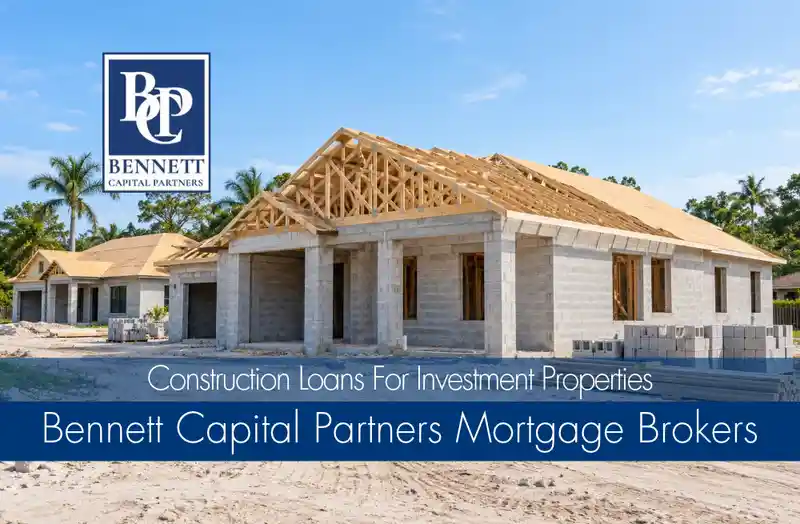
Compare construction considerations for an investment project.
Read guide
Consider the budget, builder and repayment plan for a home built for sale.
Read guideA new-build review covering the builder, budget, draws and permanent financing or exit.
View the briefReview private-capital options for eligible property and business-purpose scenarios.
View the briefStart with the commercial financing hub to identify the property, loan purpose and documentation needed for a review.
View the briefBrowse financing by the property, income documentation and transaction.
Open the directoryShare the parcel, purchase details and what you intend to build or hold.