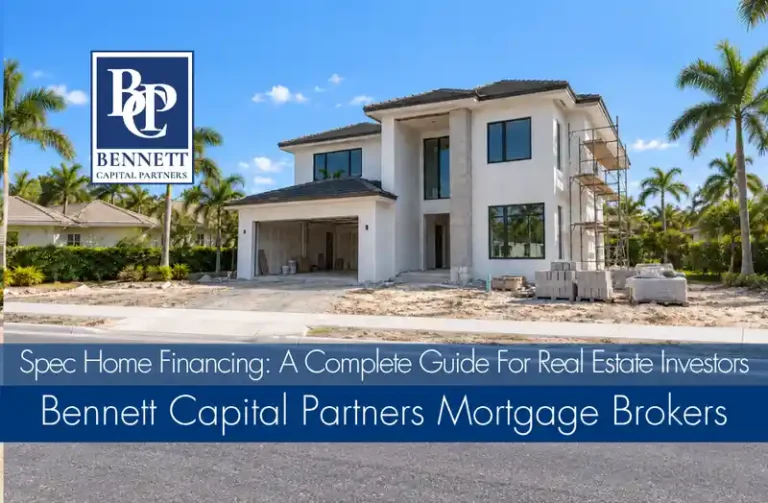
A spec house, short for speculative house, is a new home a builder starts without a specific buyer under contract. The builder chooses the lot, floor plan, and most finishes, expecting to sell the home for a profit. You may find it completed or still under construction. Review our construction loans page for program details.

Key Takeaways
- Spec means speculative. Construction starts before a particular buyer commits.
- Completion matters. A spec home is not necessarily move-in ready when listed or purchased.
- Convenience comes with tradeoffs. You may avoid early design work but have fewer customization options.
- Quality and price vary. Evaluate the builder, specifications, inspection, warranty, and comparable properties.
- Match financing to the transaction. Buying a completed home differs from building one for resale.
The buying decision comes down to the home’s price, completion stage, and how well the builder’s choices fit your needs. Bennett Capital Partners Mortgage Brokers helps Florida buyers compare financing for the property they plan to purchase.
What Is a Spec House? Meaning and How It Works
The builder commits to the project before securing a buyer, using its own judgment about the layout, features, and price that will sell. A spec home may also be advertised as an inventory home or a quick move-in home. Confirm its construction stage, because those listing terms do not establish that it is ready for occupancy.
A spec house may be completed, nearly finished, or still under construction when you purchase it. Confirm that the property satisfies the applicable completion, occupancy, and closing requirements before planning your move.
What Does “Built on Spec” Mean in Real Estate?
Builders and investors commit money to land and construction before knowing who will buy the home or the final selling price. A successful sale must cover construction, financing, holding expenses, and selling costs. If you need to finance the site separately, review land loan options before arranging construction financing.
Spec Home vs. Custom Home: Who Makes the Decisions?
A custom home starts with a particular buyer’s plans and preferences. A spec home starts with the builder’s judgment about what potential buyers want. A model home serves as a sales display for a community; it may eventually be sold, but it is not automatically the same thing as available spec inventory.
Why Builders Construct Spec Homes
Building on speculation to sell for profit
Spec home building lets a builder begin a project without waiting for a custom-home client. Using familiar plans and coordinating purchases across projects can simplify production. However, construction delays, rising costs, or a slower real estate market can reduce the expected profit or create a loss.
Appealing to a wide range of home buyers
Builders typically choose layouts and finishes for a target market rather than an individual owner. Bedroom count, usable living space, storage, and the neighborhood may matter more to that audience than highly personalized design. Broad appeal can help a home sell, but it does not guarantee demand or a quick sale.
What Can You Customize in a Spec Home?
Completed Spec Homes vs. Homes Still Under Construction
A completed spec home gives you the opportunity to tour the actual rooms and inspect the finishes before buying. An unfinished home requires a closer review of the plans, specifications, remaining work, and completion schedule. Ask what the advertised price includes, particularly appliances, landscaping, and any community amenity charges.
Changes Depend on the Construction Stage
Ask the builder for a list of selections that are still open. Paint, flooring, or countertops may be easier to change before they are ordered or installed. Moving walls, plumbing, or windows may require revised plans and a different budget. Put each agreed change, its price, and any effect on the completion date in writing before you commit.
Check the Specifications, Not Just the Model Home
Spec homes range from entry-level houses to luxury properties. The label does not establish the quality of materials or workmanship. Compare the written specifications with the actual house. A model-home tour may show upgrades that are not included in the home you are buying; ask the builder to identify those differences.
Pros and Cons of Buying a Spec Home
For a homebuyer comparing a custom home and a spec home, the main tradeoff is convenience versus control. You can evaluate a home already underway or complete, but you have fewer opportunities to change its location, layout, and finishes.
A Shorter Wait for a Completed Home
A move-in-ready home can offer a shorter path than starting a custom build. You still need to complete financing, inspections, title work, and closing. Confirm the actual delivery date before ending a lease or scheduling a move.
Fewer Design Decisions Before Moving In
Choosing a spec home can reduce the time spent selecting cabinets, flooring, fixtures, and paint colors. That can be useful when you like the existing selections. If you plan to replace several finishes immediately, include those costs when comparing homes.
A Fixed Lot and Floor Plan
You do not have to locate a separate lot, but you still need to evaluate the location. Consider drainage, access, nearby construction, homeowners association obligations, insurance costs, and how the property fits your daily needs.
A Finished Home You Can Tour and Inspect
Walking through a completed house helps you assess room sizes, natural light, storage, and privacy. A sales tour is not a substitute for an independent home inspection. The CFPB explains the distinction between an inspection and an appraisal: they serve different purposes.
Limited Personalization
Once construction is advanced, the floor plan, structural choices, and installed finishes may be difficult to change. Decide which features are essential before treating a builder credit as a solution.
The Location Is Already Chosen
A ready-selected lot saves a search, but it may not provide the privacy, access, drainage, or surroundings you prefer. Nearby construction and HOA obligations also deserve attention.
New Does Not Mean Defect-Free
A finished appearance does not establish that every item is complete or correctly installed. Inspection findings, the agreed punch list, and warranty exclusions can affect what you receive.
Timing and Total Cost Can Still Change
An unfinished spec home can face completion delays. Replacement finishes, closing expenses, taxes, insurance, and HOA charges also affect the total cost beyond the advertised price.
How Much Does a Spec Home Cost?
A spec home may cost less than a comparable custom-built home because of standardized plans and purchasing efficiencies. It is not necessarily inexpensive. Compare location, square footage, included finishes, site work, and total ownership costs rather than assuming one category always costs less.
There is no useful nationwide price tag for a spec house. Compare nearby homes with similar lots, living area, finishes, and completion dates. A lower advertised price may exclude items included in another builder’s offer.
Compare the Purchase Price, Included Features, and Monthly Costs
- House and lot: Confirm the final price, lot premium, and any charges outside the advertised base price.
- Included work: Check appliances, landscaping, fencing, window coverings, and any unfinished items against the written specifications.
- Cash needed to close: Review the down payment, closing costs, prepaid expenses, and conditions attached to builder credits.
- Ongoing expenses: Obtain property-specific estimates for taxes, insurance, and HOA charges. Compare the cost of changes you would make after moving in.
| Comparison point | Spec home | Custom home |
|---|---|---|
| Design choices | Builder makes most choices; remaining changes depend on construction stage and contract. | Buyer usually has greater involvement in plans and selections. |
| Timing | A completed home can shorten the wait; unfinished inventory still carries completion risk. | Design, approvals, and construction generally occur before move-in. |
| Price | Evaluate the asking price and included features against comparable properties. | Evaluate land, design, site work, construction, and change-order costs together. |
| Quality and warranty | Depend on the builder, specifications, inspection findings, and written coverage. | Depend on the same factors; customization alone does not guarantee quality. |
Explore Spec Home Financing
Get a clear financing strategy before you make an offer.
- Loan Options
- Estimated Payments
- Property Review


Disadvantages of Spec Homes: Limited Choices and Repair Risk
You may have little flexibility to change the floor plan or major structural features. New construction can also have defects or incomplete work. Obtain a written punch list, clarify who handles repairs, and read the warranty before closing. The FTC notes that builder-warranty coverage varies by component and duration; a blanket “one-year warranty” description can be incomplete.
You may also pay for finishes you would not have selected yourself. Before accepting that compromise, price the changes you expect to make. If the layout or location does not work for you, a builder credit will not solve the underlying problem.
What Can Delay Closing on a Spec Home?
Unfinished work, unresolved inspection findings, appraisal conditions, and outstanding loan requirements can change the schedule. Ask the builder and lender what must be finished or documented before closing. Coordinate your rate-lock expiration, current housing arrangements, and moving date with that schedule rather than relying on an estimated completion date alone.
Read the Builder Warranty Before Closing
Request the actual warranty and its claim instructions. Check the covered components, exclusions, deadlines, and responsibility for repairs. Keep the punch list and warranty documents with the purchase paperwork, and report covered problems in writing. A builder’s walk-through, an independent inspection, and warranty coverage serve different purposes.
Spec Home Financing: Buying a House vs. Building One
Financing a builder’s project is different from financing the purchase of a finished house. A builder needs funds to acquire or develop the property and complete construction before a sale. A homebuyer generally seeks a mortgage for the completed property, subject to the chosen program’s requirements.
Bennett Capital Partners is a mortgage brokerage, not the direct lender. We help evaluate financing options through lending partners. For a build-to-sell project, start with our spec home construction loan guide and spec home financing guide for investors.
Do not assume a consumer construction-to-permanent mortgage permits a speculative resale project. Explain the intended occupancy, ownership, construction stage, and exit strategy to the lender at the outset.
Building a Spec Home: Budget and Resale Risk
Start with a realistic budget and exit plan. An attractive projected selling price is not enough if the project runs over budget or takes longer to sell. Compare financing terms alongside construction and marketing assumptions.
- Project costs: Account for land, site preparation, permits, labor, materials, and professional fees.
- Carrying costs: Include interest, taxes, insurance, utilities, and maintenance through the expected sale.
- Contingency: Plan how you would fund overruns or a delayed completion.
- Exit risk: Test a lower selling price and a longer marketing period before committing.
Our guide to builder spec home financing provides additional context. Financing can support a project, but it cannot ensure profitability.
How to Buy a Spec House
Set Your Budget and Compare Mortgage Options
For a Florida home purchase, our brokerage can help compare mortgage options based on your finances and the property. Tell us whether you intend to occupy the home, rent it, or resell it. Those distinctions affect which programs may fit. A pre-approval review can help establish a budget, but final approval still depends on underwriting and the property.
Choose Financing for Your Transaction
| Financing type | Purpose and key consideration |
|---|---|
| Purchase mortgage | For buying a completed home. Eligibility depends on the program, borrower, occupancy, and property, not a universal spec-home credit score. |
| Builder or construction loan | Funds an approved building project. Confirm that speculative construction for resale is permitted. |
| Land and development financing | May cover land acquisition or development. Do not assume the same loan also funds vertical construction. |
| Bridge financing | May address a temporary funding gap. Review the repayment source, maturity date, costs, and collateral requirements. |
| Home equity financing | Uses equity in another property when available. It adds a secured obligation and requires its own qualification review. |
Questions to Ask Before Buying a Spec Home
- What work remains? Ask for the remaining items and expected completion, occupancy, and closing dates.
- What does the price include? Review features, lot premiums, incentives, closing costs, and ongoing expenses.
- What does the contract require? Review deposits, change orders, inspection rights, delays, and financing contingencies before signing.
- When can your inspector visit? Allow time to address findings and document agreed repairs.
- What does the lender still need? Confirm completion requirements and obtain property-specific insurance quotes.
- What must be finished at the walk-through? Reconcile the punch list, warranty documents, and promised work before closing.
Can You Negotiate the Price of a Spec House?
You can make an offer and ask about closing-cost assistance, included appliances, upgrades, or repairs. A builder may prefer one concession over another, but it can also decline. Your real estate agent can help compare the asking price with similar available and recently sold homes.
Compare the complete financing offer if an incentive requires a particular lender. A credit should be considered alongside the interest rate, points, other loan costs, and rate-lock terms. Request comparable Loan Estimates so you can see what each offer costs. Have your lender confirm that proposed seller credits fit the loan’s requirements before relying on them.
Where to Find Spec Homes for Sale
Search builder websites for inventory homes, available homes, and quick move-in listings, and ask a local real estate agent about new construction. Check whether the listing describes a completed house, a home being built, or a plan that has not started. Confirm the address, included features, availability, and expected completion date directly.
Stay Informed with Our FREE Florida Rate Watch Newsletter! If you’re in Florida, don’t miss out on crucial rate updates. Subscribe now and make informed financial decisions.
|
|
How Spec Home Construction Loans Work
Construction loans typically release funds in stages as work progresses. The draw schedule, documentation, inspections, interest calculation, and repayment terms depend on the lender and loan agreement. Review those terms before committing to contractor payments.
The CFPB’s construction-loan explanation describes short-term financing and possible repayment or conversion arrangements. A conversion to permanent financing is not automatic unless the loan provides for it and its conditions are met.
For a buyer’s mortgage, the lender must also address completion. Fannie Mae’s completion requirements generally require verification before a loan is sold to Fannie Mae, with specific provisions for postponed improvements. These are loan-delivery rules, not permission to occupy an unfinished house or a promise that a lender will close before work is complete.
See our construction mortgage guide for related background, or contact our brokerage to discuss the transaction.
Is Buying a Spec Home Right for You?
A spec home can fit if you like the chosen lot and floor plan, want fewer design decisions, and can work with its completion schedule. A custom build may fit better if specific layout or accessibility requirements would be expensive to add later. Tour the actual home, price the compromises, and review the inspection and contract before deciding.
Frequently Asked Questions
What credit score is needed for a construction loan?
There is no single credit-score requirement for every construction or spec-home loan. Requirements vary by lender, program, occupancy, project, and borrower profile. Ask for the criteria for your particular transaction rather than treating 580 or 680 as a universal threshold.
How do you build a spec home?
Evaluate the lot and market, prepare plans and a complete budget, secure the required approvals and financing, then manage construction and the sale. A financing proposal should explain the costs, schedule, experience of the project team, and repayment strategy. Bringing in an investor does not eliminate the need for capital or remove project risk.
What is a spec builder?
A spec builder starts homes for sale without a specific buyer committed at the outset. The builder selects the design and assumes the risk that the finished property may take longer to sell or sell for less than expected.
Are Spec Homes Only Built in New Developments?
No. A builder can construct a spec home on an individual lot as well as in a larger development. The defining feature is that construction begins without a particular buyer committed to the project. Check the actual property and builder rather than assuming every spec home belongs to a planned community.
What is the difference between a spec home and a model home?
A spec home is built for sale without a preselected buyer. A model home is used to display a builder’s plans and finishes. If a model is offered for sale, confirm its availability, any leaseback arrangement, condition, and included features.
Are spec homes cheaper than custom homes?
They can be, but not in every comparison. Location, size, materials, land costs, and design choices all affect price. Compare similar properties and complete budgets rather than relying on a general discount.
When is the right time to buy a spec home?
When the property, financing, and completion schedule fit your needs. A builder may offer incentives on available inventory, but there is no guaranteed season or date that produces the best price. Compare the entire offer, including any conditions attached to an incentive.
What Should You Bring to a Spec Home Tour?
Bring the listing, floor plan, written specifications, and a list of features you need. Compare them with the actual property and note unfinished work or differences. Save questions about defects for an independent inspector and request written answers about included features.
Can You Buy a Spec Home Before It Is Finished?
A builder may accept a purchase contract while construction is underway. Review the remaining specifications, completion schedule, inspection access, and contract provisions for delays. Signing a contract does not establish that the home is ready for occupancy or that your lender will close before construction is complete.
Should you get a home inspection for a new spec home?
Yes. An independent inspection helps identify problems in a new home as well as an existing home. It does not guarantee that every defect will be found, and it is different from an appraisal or a builder’s walk-through.
Does a Builder Incentive Make a Spec Home the Better Deal?
Compare the full purchase and financing costs. Ask what the incentive covers, whether it requires a particular lender, and what happens if closing is delayed. A larger credit alone does not establish that the offer costs less.
Discuss your Spec Home Financing options
Discuss financing for buying or building a spec home with Bennett Capital Partners.
Get a Quote →
Sources & Further Reading
- What is a construction loan?Consumer Financial Protection Bureau
- Schedule a home inspectionConsumer Financial Protection Bureau
- Warranties for New HomesFederal Trade Commission
- B4-1.2-05: Completion and postponed improvementsFannie Mae Selling Guide
- Loan Estimate ExplainerConsumer Financial Protection Bureau