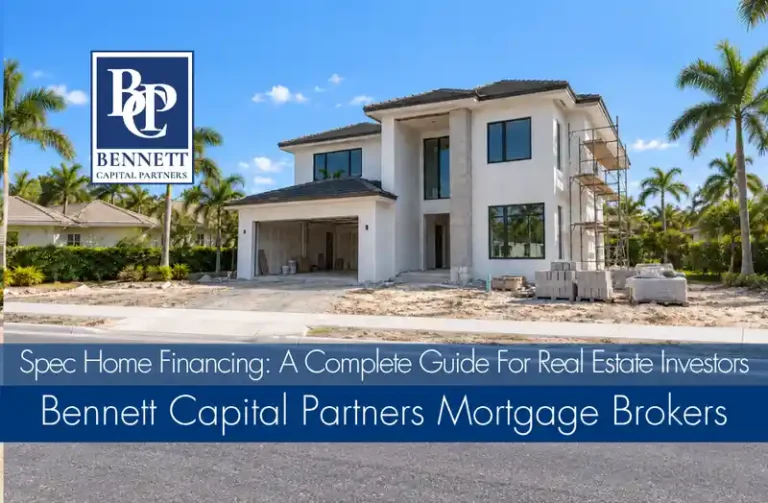

A VA one-time close construction loan combines approved land and construction financing with a permanent mortgage in one closing. Eligible borrowers may build a primary residence without a down payment and without monthly mortgage insurance, subject to entitlement, appraisal, underwriting, and lender requirements.

Key Takeaways
- One closing: Construction and permanent financing are arranged together, with completion requirements before the permanent payment schedule begins.
- Eligibility is only the start: A Certificate of Eligibility confirms the VA benefit; the lender still reviews credit, income, entitlement, builder, and property.
- Zero down does not mean zero costs: Funding fees, closing costs, reserves, and changes to the project require a documented budget.
- Verify the actual program: Builder acceptance, property types, rate locks, and construction timelines vary by lender. VA removed the standard builder-ID requirement in March 2025.
The lender must approve more than your income and credit. Your builder, lot, construction plans, budget, and completion conditions also matter. This guide explains how VA construction loans work, what you may need to pay, and the questions to resolve before committing to a Florida build.
Understanding the VA One-Time Close Construction Loan
A VA construction-to-permanent loan establishes the long-term financing before the home is built. Funds for construction are held in a controlled account and released as work progresses. When the project satisfies the loan conditions, the lender modifies the loan to its permanent terms. This differs from buying a completed new home with a standard VA purchase loan.
Benefits of using a VA loan for construction projects
The principal benefits are a single loan closing, potential financing without a down payment, and no monthly private mortgage insurance. These features can reduce the amount of cash needed compared with some other construction loan options. They do not eliminate underwriting, project expenses, or the risk of delays.
The Department of Veterans Affairs guarantees part of an eligible loan made by a private lender. That guaranty protects the lender; it does not guarantee your approval, the builder’s workmanship, or an on-time completion. Compare actual offers rather than assuming a VA loan always has the lowest interest rate.
VA Construction Loan Requirements
Eligible veterans, active-duty service members, qualifying National Guard or Reserve members, and certain surviving spouses may qualify for the benefit. Service history and discharge requirements differ. Your Certificate of Eligibility (COE) establishes the benefit and available VA entitlement, but it is not a loan approval.
VA does not set a universal minimum credit score. Construction lenders set their own credit standards and may require stronger qualifications than for an existing-home purchase. The lender reviews reliable income, debts, credit history and assets, and residual income, meaning the money left after the required expense calculation. A quoted 620 or 640 minimum is a lender requirement, not a rule that applies to every VA construction loan.
You must intend to occupy the completed home as your residence, subject to applicable VA occupancy provisions. This is not financing for a vacation home or a build intended solely for rental investment. Discuss deployment or other occupancy circumstances early. Our VA eligibility and application guide explains the broader purchase process.
Documentation needed for loan approval
Prepare your COE or the service records needed to obtain it, identification, income documentation appropriate to your employment, recent asset statements, and details of debts and current housing expenses. The lender orders credit information and may request explanations or supporting records for unusual items. See our guide to a mortgage letter of explanation if one is requested.
The project file usually includes the land contract or deed and lien information, construction contract, plans and specifications, itemized budget, expected timeline, permits or permitting status, builder credentials, and the proposed draw schedule. Requirements depend on the site, property type, and lender. An initial discussion can begin before every item is final; closing cannot rely on an unfinished approval package.
Keep borrower documents and project documents organized separately. Ask who is responsible for each missing item and when the lender needs it. Your builder and design professionals prepare the construction documents; a mortgage broker helps coordinate the financing requirements.
Explore Your VA Construction Financing
Discuss your construction plans, eligibility, and financing goals.
- VA Eligibility
- Project Review
- Construction Financing


Applying for a VA One-Time Close Construction Loan
Begin with a financing review before buying a lot or paying a substantial nonrefundable builder deposit. Bennett Capital Partners Mortgage Brokers can review your Florida project and discuss available lender options. Product availability, builder acceptance, and terms must be confirmed for the specific application.
Finding a VA Construction Loan Lender
Not every VA lender offers a one-time close construction loan. Ask whether the proposed product truly combines construction and permanent financing, or instead uses a short-term construction loan followed by a separate VA loan. Both structures can serve a purpose, but their approvals, costs, and risks differ.
Ask the mortgage loan officer or broker to identify the lender’s credit requirements, maximum loan amount, eligible property types, construction deadline, builder review, reserve requirements, and completion conditions. A general VA pre-approval does not establish that a particular construction project is acceptable.
Compare the Loan Estimate and construction agreement together. Ask about origination charges, rate-lock terms, extension costs, draw administration, interest reserves, and which expenses belong to the builder. Our construction financing overview can help you compare the available structures.
Get important answers in writing before you commit. In particular, ask what happens if the appraisal is below the project budget, the builder is not accepted, or the home takes longer to finish than planned.
Preparing the construction plans and budget
Your builder should prepare a detailed scope of work and budget covering labor, materials, site preparation, utilities, permits, and other agreed project costs. Identify allowances and exclusions. A low initial bid is difficult to compare with another proposal if important work is omitted.
Before buying land in Florida, confirm buildability, zoning, access, utilities, drainage, permitting, and applicable flood or elevation requirements with the appropriate professionals and local authority. Obtain insurance estimates early. The mortgage review does not replace a survey, engineering assessment, title review, or local permitting approval.
Under VA’s construction guidance, documented acquisition costs can include the contract to build, the balance owed on the land, an interest reserve and permits if not already included in the contract, and a contingency reserve. Avoid counting the same expense twice. The lender must determine what is eligible and how any cash shortfall will be covered.
The loan application process
The financing sequence starts with eligibility and borrower review, followed by builder and project review. The lender orders the proposed-construction appraisal using the plans and specifications. For a one-time close, VA guidance calls for ordering it before completion of the foundation. Do not assume construction can start before the lender clears the transaction.
The appraisal establishes VA’s reasonable value and leads to a Notice of Value (NOV) with conditions. After underwriting and closing, approved land costs may be paid and construction funds placed in the draw account. The lender must obtain your written approval before each draw payment to the builder.
Before closing, confirm the approved budget, contract, insurance arrangements, draw process, and documents needed at completion. Report changes in employment, debt, assets, builder, or project scope promptly. One closing is not permission to ignore conditions or assume every later change will be accepted.
To discuss your project, use our pre-approval request. Include the Florida property location, whether you own the lot, your planned construction budget, and the builder’s status. A preliminary review is separate from final loan approval.
How VA Construction Loans Work During the Build
A construction loan requires oversight throughout the build. Understand who approves work, releases funds, reviews changes, and confirms completion. Keep the agreed scope and payment schedule available so you can compare progress with the contract.
Construction process and inspections
Local building inspections, lender draw reviews, and VA’s final appraisal-related inspection serve different purposes. The lender is responsible for monitoring the project. Required foundation, framing, and final inspections or accepted alternatives must be documented as applicable to the property and NOV.
At completion, the VA fee appraiser’s final inspection checks that the home meets VA minimum property requirements, follows the approved plans and changes, and maintains the appraised as-completed value. A certificate of occupancy alone should not be treated as satisfying every lender or NOV condition. Applicable warranty requirements must also be met.
Request approval before making change orders. VA guidance requires advance appraiser review to protect value; financing changes made after the appraisal requires an updated appraisal. Discuss the payment source before authorizing an upgrade. Do not assume a larger construction budget can automatically be added to the loan.
One-Time Close vs. Two-Time Close Construction Financing
A one-time close arranges the permanent mortgage at the outset. A two-time close starts with non-VA interim construction financing and later closes a VA-guaranteed loan to replace it. The second structure involves a later underwriting and closing process, which can create additional qualification and rate risk.
One closing can avoid duplicated settlement work, but it does not guarantee the lowest total closing cost. Construction-related charges and an extended rate lock can affect the comparison. Evaluate the full financing package, the builder requirements, and the completion rules rather than choosing solely by the number of closings.
Ask exactly what must be verified when construction is complete. A one-time close establishes permanent financing early, but the loan still has contractual completion conditions. Do not rely on an unconditional “qualify once” promise without reviewing the lender’s written terms.
The interest rate is determined by the lender and your agreement. Some programs lock your interest rate before construction starts; VA also permits a ceiling-floor arrangement with a stated maximum rate and an opportunity to lock lower. In that arrangement you must qualify at the maximum rate. Review expiration dates, extension terms, and any float-down conditions.
VA Funding Fee for Construction Loans and Other Costs
No down payment and no monthly mortgage insurance can be valuable VA loan benefits. They do not mean the project has no upfront costs. Ask for a written breakdown separating eligible construction costs, borrower closing costs, builder expenses, reserves, and the VA funding fee.
For nonexempt borrowers, the current VA funding fee for construction loans is generally 2.15% for first use or 3.3% for subsequent use when the qualifying down payment is below 5%. The rate is 1.5% with at least 5% down and 1.25% with at least 10% down. The applicable fee can be financed. Eligible equity may affect the construction-loan fee calculation; it does not automatically create an exemption.
Some borrowers are exempt, including those receiving qualifying VA compensation for a service-connected disability and other categories listed by VA. Confirm exemption status before closing. The lender must remit the funding fee within 15 days of closing; it does not wait until the home is finished.
For one-time close construction financing, VA limits the loan to the lesser of documented acquisition costs or VA reasonable value, plus the applicable funding fee. Full entitlement removes the VA county loan-limit constraint, but it does not remove the lender’s approval limits, the appraisal, or the acquisition-cost calculation.
Hypothetical example: Assume $400,000 of eligible documented acquisition costs, a $420,000 VA reasonable value, full entitlement, no qualifying down payment or equity adjustment, first use, and no funding-fee exemption. The base loan ceiling is $400,000. A 2.15% financed funding fee is $8,600, giving a potential total of $408,600, subject to approval. Other borrower closing costs are not automatically financed. This is an illustration, not a loan offer.
Budget for delays and overruns as well. Regular principal payments generally begin after completion, but interest still accrues during construction. VA permits the borrower to pay interest not covered by the reserve or after the reserve is depleted to prevent default. Ask how a delay affects cash needs, the final payment, and the remaining loan term. Do not assume every build delivers a fresh 30-year repayment period after completion.
Stay Informed with Our FREE Florida Rate Watch Newsletter! If you’re in Florida, don’t miss out on crucial rate updates. Subscribe now and make informed financial decisions.
|
|
Builder and Property Requirements: Modular Homes and More
Confirm the lender accepts your builder and property type before ordering a home or signing a construction contract. State and local licensing still apply. Review references, insurance, relevant project experience, and the construction contract with the appropriate professionals.
Builder-ID update: VA Circular 26-25-1, effective March 31, 2025, eliminated the VA builder identification number requirement for standard VA-guaranteed new and proposed construction loans. Older handbook passages may still mention it. The change does not remove lender builder review or local licensing, and it does not apply to the separate SAH grant and Native American Direct Loan programs.
A modular home and a manufactured home are not interchangeable classifications. Both can involve VA financing when the property meets the applicable requirements, but a lender offering site-built construction may not accept either type. Verify the foundation, real-property status, appraisal, installation, and program requirements before making a deposit.
VA guidance allows a veteran to act as their own contractor or builder, with documented labor and material costs. Many lenders restrict owner-builder projects. Read our owner-builder construction loan guide, then confirm whether the specific VA program will accept your role. Owning the land is different from acting as the builder.
VA financing is for an eligible home you will occupy. A proposed multifamily build, unusual construction method, or other specialized property needs a specific lender review. Do not assume a standard VA purchase program’s property options are all available under its construction product.
If a suitable single-close program is unavailable, discuss a two-close structure or buying a completed home from a builder. Borrowers without VA eligibility can also compare other construction mortgage options. Each path has its own approval, cash, and timing requirements.
Before You Commit to a VA Construction Project
A workable VA construction plan brings together an eligible borrower, an acceptable site and builder, a complete budget, and financing terms that address delays and completion. Settle those questions before committing money to the project.
Bennett Capital Partners can help you discuss financing for a Florida primary residence. Bring your COE status, lot details, plans, and builder proposal so the conversation can focus on the project’s actual requirements.
Commonly Asked Questions
What is a VA One Time Close Construction Loan?
It is a VA-backed construction-to-permanent loan that arranges financing for an eligible new primary residence through a single closing. The lender releases construction funds through draws and modifies the loan to permanent terms after the required completion conditions are satisfied.
How is a one-time close different from a traditional construction loan?
A standalone construction loan needs a separate permanent financing solution. A VA one-time close establishes that financing at the initial closing. A two-close structure requires another closing and later loan approval. Compare the full costs and conditions, not just the closing count.
What are the benefits of a VA One Time Close Construction Loan?
Potential benefits include no down payment for qualifying borrowers, no monthly mortgage insurance, and one closing for construction and permanent financing. A rate lock may be available, but its duration, pricing, and conditions depend on the lender.
Can I build a modular or manufactured home with a VA loan?
Potentially. The property must satisfy the applicable VA requirements, and the construction lender must accept that property type. A permanent foundation alone does not establish eligibility. Confirm the home’s classification and installation requirements before ordering it.
How do I qualify for a VA construction loan?
You need VA benefit eligibility, sufficient entitlement, acceptable credit and income, and an approved project. The lender also reviews residual income, assets, builder qualifications, and the property. VA does not set a universal minimum credit score; lender standards apply.
Can I use this loan for a renovation instead of a new home?
This article addresses new construction. VA also permits eligible alteration and repair financing, but the scope and lender program differ. Discuss a renovation loan when you plan to improve an existing house rather than build a new residence.
How much can I borrow?
The VA construction loan amount is limited by documented acquisition costs, VA reasonable value, entitlement, and lender approval. The applicable funding fee may be added. Having full entitlement does not mean you can borrow any amount or automatically finance a budget above the appraised value.
Discuss your VA Construction Financing options
Review VA construction financing for your Florida home project.
Get a Quote →How long does a VA construction loan take?
Financing approval and the build have separate timelines. Plans, permits, builder review, appraisal, and underwriting affect closing; site conditions, labor, materials, and changes affect completion. Obtain a project-specific schedule and written extension terms instead of relying on a standard purchase-loan closing estimate.
Can I refinance after the home is complete?
Refinancing after completion may be possible if you meet the applicable VA refinance and lender requirements. It is a separate transaction with its own costs and qualifications. The one-time loan’s scheduled transition to permanent terms is not itself a new refinance.
Can I build on land I already own or include a lot purchase?
Yes, subject to the approved transaction and lender requirements. If you own the land outright, its original cost or current value is not added to VA’s acquisition-cost calculation. Eligible land equity can affect the funding-fee calculation, but this construction loan does not automatically let you cash out that equity.
Must my construction plans be final before I apply?
You can begin a financing discussion while planning. The lender needs the required plans, specifications, contract, and budget to complete its project review and appraisal process. Ask which items are needed for preliminary review and which must be final before closing.
Does the loan automatically convert when construction ends?
The loan converts to permanent financing under its agreed terms after the required final inspection, NOV conditions, and lender completion documents are satisfied. The home being physically finished does not, by itself, complete every financing requirement.
Can I lock my interest rate before construction?
Ask the lender. A program may offer an upfront lock or a ceiling-floor arrangement. Confirm the maximum rate, any float-down option, expiration, and extension terms in writing. Construction financing is not a universal guarantee against rate changes.
How does an FHA one-time close differ from a VA loan?
Both can combine construction and permanent financing through a participating lender. VA requires eligible service-related benefits and has no monthly mortgage insurance. FHA has different eligibility, down-payment, and mortgage-insurance requirements. Availability and builder standards still depend on the specific lender.