
Buy a home for your own use
Compare conventional mortgages and jumbo loans using your budget, income documentation and down payment. For a condo, bring the building and unit address so we can discuss the project review alongside your qualifications.
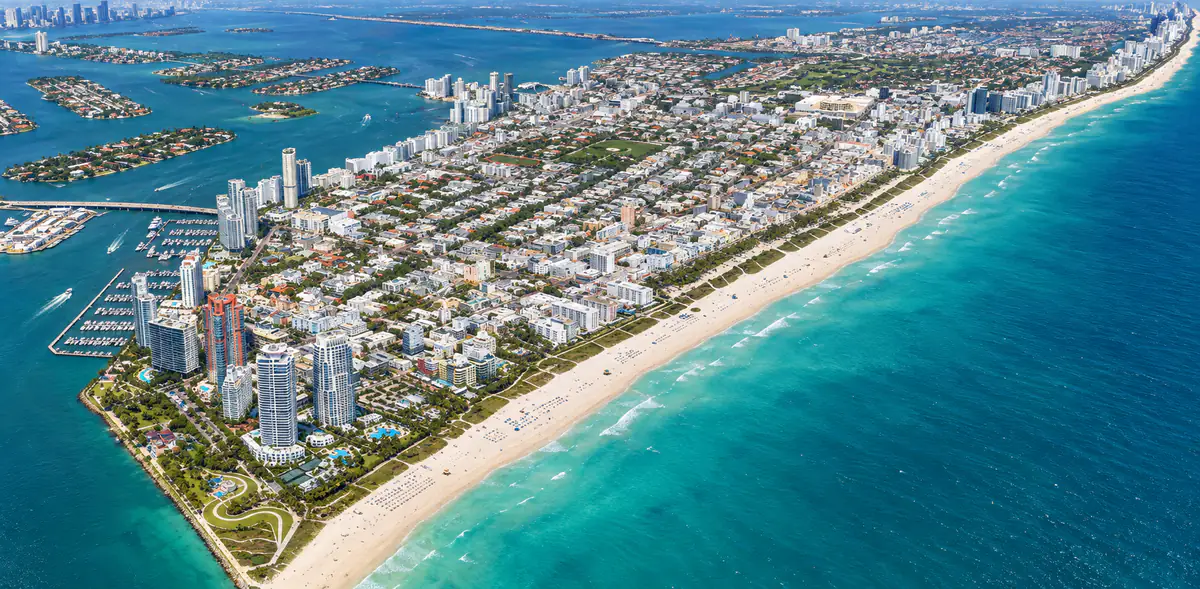
Buying or refinancing a home in Miami Beach? Bennett Capital Partners Mortgage Brokers helps you compare financing based on your income, available funds and plans for the property. If you expect to rent it, bring the proposed lease length and any owner-use restrictions into the conversation early.
Serving Miami Beach from our Brickell office: 1101 Brickell Avenue, Suite 800, Miami, FL 33131. Company NMLS #2046862.
We are a mortgage broker. Financing depends on borrower, property and lender requirements.
Compare conventional mortgages and jumbo loans using your budget, income documentation and down payment. For a condo, bring the building and unit address so we can discuss the project review alongside your qualifications.
Start a refinance discussion with your current mortgage, goal and expected ownership period. Compare costs and the new repayment term, and tell us if the property use has changed.
Describe the shortest intended lease, your personal stays and any management agreement before comparing investment financing. Use the property-use brief below to identify the information needed for lender review.
The City of Miami Beach describes vacation and short-term rentals as rentals of less than six months and one day. Under the City’s Resiliency Code, as summarized in its guidance, this use is prohibited in all single-family homes and in many multifamily buildings in certain zoning districts. A three-month seasonal lease therefore needs the same local permission check; an association's minimum lease term does not settle the City's answer.
Start with the City's vacation and short-term rental guidance, including its unit-verification tools. Confirm the exact unit and proposed use with the City. Required local authorizations can include a Business Tax Receipt and Resort Tax account. A listing, old rental advertisement or building-level map is not a substitute for current confirmation.
| Your plan | City and association questions | Mortgage review |
|---|---|---|
| Live there full time | Confirm the legal residential use and any association occupancy requirements. | Compare a primary-residence home loan based on your qualifications, loan amount and property. |
| Use it part of the year | If renting between visits, specify the dates. Request lease rules and any limits on your own stays. | Have the lender assess second-home eligibility and any management agreement before selecting that loan category. |
| Lease for six months and one day or longer | A lease outside the City’s short-term definition must still meet the association’s rules and any other applicable requirements. | Disclose the rental plan and any personal use. Ask which occupancy category and rental-income method apply. |
| Offer shorter or seasonal stays | Obtain the City's property-specific answer and the restrictions that apply to you as the owner. | Ask whether the lender accepts the operation and what income evidence it requires. A seller’s or listing revenue projection alone does not establish qualifying income. |
| Join a hotel or rental program | Review the unit's authorized operation, rental agreement and control over owner occupancy. | Discuss condotel financing when hotel operations affect the project. The lender must accept the specific building and borrower. |
Lender definitions can differ from the City’s. Fannie Mae's short-term rental income guidance describes stays typically shorter than 30 consecutive days and sets separate eligibility and documentation requirements. Ask which rules the selected lender is applying to your actual plan.
Use these five prompts to prepare your notes. You can begin with incomplete information; mark an unanswered question as open. For each document or response, record its date, who provided it and which unit it covers.
A seller's rental history may not describe your rights as a buyer. Florida Statutes 718.110(13) provides that an amendment prohibiting rentals, changing the rental term or limiting how often units may be rented applies only to owners who consent to it and to owners who acquire title after it takes effect. A seller who did not consent may be exempt from a restriction that would apply to you as a buyer. Ask the association for the applicable documents and have a Florida real estate attorney resolve unclear restrictions.
Record the City's response about permitted use, the association's response about the restrictions applying to you, and the lender's response about occupancy, qualifying income and project eligibility. Include the supporting document and date for each. One favorable answer does not resolve the others.
Send us a summary of your plan and the questions still open. Bennett Capital Partners helps identify the financing information to gather, compare available options and coordinate submission to the selected lender. Legal-use questions belong with the City, the association and qualified legal advisers; the lender makes the underwriting decision.
Illustrative scenario, not a client transaction: You want winter visits and a three-month summer tenant, and need that rent to qualify. Keep the proposed lease duration, local permission and qualifying-income question in your brief. Do not select “second home” simply because you will also stay there. Ask the lender to assess the complete occupancy plan before relying on a financing proposal.
If any answer remains open, identify who can resolve it and what evidence is missing. If the intended use is prohibited, discuss a different, permitted use or a different property. A different mortgage program cannot authorize an unlawful rental.
Have a property address and a use question?
Start My Property ReviewCompare purchase offers using the same price, down payment, occupancy and loan amount. For rental plans, discuss eligible DSCR options or short-term rental financing using the completed property-use brief. Availability depends on the borrower and property.
Fannie Mae's second-home requirements include a one-unit property, personal occupancy during part of the year and exclusive control over its use. A management firm cannot control occupancy. Identified rental income cannot be used to qualify, and all other second-home requirements must still be met. Other loan programs have their own rules.
A unit’s rental permission is separate from the building’s eligibility. Fannie Mae's project rules address hotel operations, rental pooling and owner-use restrictions. They also cover building condition and other project risks. Review the broader condo loan requirements; where a project does not fit, ask about a specific non-warrantable condo review rather than assuming another program will accept it.
Compare the mortgage rate, fees, lender credits, mortgage insurance where applicable and cash to close. Add association dues, insurance quotes, assessments and any management charges to your ownership budget. Confirm which amounts are estimates. For consumer loans that use a Loan Estimate, the CFPB's comparison guide explains the relevant fields. Ask for the appropriate written terms for a business-purpose loan.
For a refinance, bring your current mortgage statement and disclose any change in occupancy or rental operation. Compare your current loan’s remaining balance and term with the new loan’s costs and repayment period. Prior financing is not evidence that a new mortgage lender will accept the current scenario.
We serve Miami Beach buyers, homeowners and investors from 1101 Brickell Avenue, Suite 800, Miami, FL 33131. Start with your financing goal, the property and your intended use. We explain the available financing paths and the information needed for a lender review.
For neighborhood comparisons, parks, transportation and daily-life research, visit our Miami Beach neighborhood guide. Weigh those preferences alongside the property's permitted use and total ownership costs.
View our Brickell office on Google Maps or call 305-507-9957.

President & Founder
NMLS #1098318
Use the previous and next review buttons, swipe, or use the left and right arrow keys to browse reviews. Home goes to the first review; End goes to the last.
“He was very responsive and followed the deal all the way through closing.”
“Clear communication, strong execution, and real expertise.”
“Phil Bennett of Bennett Capital Partners Mortgage went the extra mile when approving my loan.”
“What truly stood out was their deep knowledge of the Miami real estate market, particularly in condominium financing.”
“He is professional, has the right resources to make things happen quickly.”
“I highly recommend using Phillip and his team if you have an investment property you need financed or refinanced.”
Selected excerpts from firmwide Google reviews. These are not presented as Miami Beach transactions. Read the linked reviews for full context.
Individual experiences vary. Testimonials do not guarantee approval, terms, rates or results.
Specialized programs may consider eligible condo-hotel properties. The review includes hotel operations, management and rental arrangements, personal-use restrictions and borrower qualification. Review condotel loan options with the actual property documents before assuming an ordinary condo program applies.
Yes. Share what you know and identify the unanswered questions. An initial financing discussion can help you understand what to request; it does not establish legal use or loan approval.
No. The lender decides which income evidence and calculation apply. Fannie Mae has a conditional route for short-term rental income on eligible one-unit investment properties, including legal-operation and documentation requirements. Project eligibility still matters. A seller's advertised revenue is not a financing commitment.
It can. Provide the assessment notice, purpose, amount and payment schedule. The lender may need the supporting building information as well as the financial obligation. A rental-use review does not replace that project review.
Our office is in Brickell in the City of Miami. We serve Miami Beach from that office and through remote communication. Use the address and contact details above to arrange your next conversation.
Include the property address if known, your purchase or refinance goal and your timing. If renting is part of the plan, tell us the shortest proposed lease, any management arrangement and whether rent is needed to qualify.
Prefer to talk?
305-507-9957
Please do not send Social Security numbers, account numbers or financial documents through this form. An inquiry is not a loan application or a commitment to lend.
Use the official sources linked above for the applicable rules, and ask the responsible agency or professional about your property. Explore our Miami mortgage services, all areas served or the loan program directory for your broader financing needs. Nearby: Brickell mortgage services · Sunny Isles Beach mortgage services.
Financing is subject to lender underwriting, credit approval and property or project eligibility. Programs and terms can change. Bennett Capital Partners Mortgage Brokers does not provide legal, tax or insurance advice. Company NMLS #2046862. Philip Bennett NMLS #1098318. Equal Housing Opportunity.

Explore the top Miami condo investments, from Brickell to Sunny Isles Beach, and make informed decisions for your next investment opportunity.
Read guide
Uncover the distinctions in 'Warrantable vs Non-Warrantable Condos'. Learn how these types influence your financing choices.
Read guide
Master condo financing problems with our guide. Uncover common issues and solutions. Explore mortgage options with Bennett Capital Partners Mortgage today.
Read guide